Our bodies are made up of 60% water or bodily fluids. Consequently, failing to hydrate properly results in dehydration. This occurs when there is an inadequate amount of water in the body’s cells. Dehydration causes the body to overwork itself in an attempt to store more water and try to survive. Consequently, this can lead to more health problems.
If you don’t take enough fluids, dehydration will eventually slow you down. It can make you feel sick and tired. In the worst cases, it can even lead to seizures and comas. For this reason, it is important to know the common symptoms that follow dehydration to correct the situation or get prompt medical attention.
Now, this is the first and most common thing you would notice about yourself if you are starting to get dehydrated. Why does thirst occur after dehydration? When you drink very little water, your body loses the balance of fluid that it requires. At that moment, you may experience thirst. If you are feeling thirsty, you can prevent yourself from getting further dehydrated by drinking plenty of liquids such as water and taking electrolyte replacement.
Dehydration during extreme physical exertion is known to affect muscle cells and can lead to muscle cramps. This occurs because tissues surrounding the muscles contract to compensate for the insufficient water in the body. The longer you go without enough water, the worse it will get.
Muscle cramps are a very common condition that affects athletes such as golfers, swimmers, runners, cyclists, swimmers, and wrestlers. When muscle cramps occur, it is very difficult to perform basic daily tasks like getting out of bed, driving a car, or walking to the bathroom.
For athletes, the best way to combat dehydration is to replenish with water that contains electrolytes such as sports drinks. This helps prevent further dehydration and ensuing muscle cramps.
Many people do not realize that dehydration can lead to problems with their urinary tract, including the fact that it can cause you to lose your ability to urinate at all. Without enough fluid intake, there’s nothing much for the body to flush either.
Some people find that when they experience a bout of dehydration, they will also experience other issues such as bladder discomfort and even lower back pain. If you are experiencing any of these symptoms, you must contact your physician immediately to have any potential medical issues resolved.
As time passes, the number of dissolved solids in the urine increases with dehydration due to poor water intake. Because of this, the concentration of toxins also increases. When more toxins accumulate, the urine becomes darker. In an effort to rid the body of as many toxins as possible, the kidney often pushes the fluids back up through the urine.
Dark-colored urine is mainly due to the inability of the kidney to filter out toxins from the urine in an effort to preserve water in the body. When the urine stays in the body for a long period without being filtered, the concentration of toxins goes higher. Eventually, this can cause other medical issues as well.
When the body is dehydrated, the brain tissue also loses water. The brain shrinks and triggers the pain receptors that surround it. When this happens, a headache may be experienced. Also, dehydration can cause the blood volume to drop, lowering the blood flow, oxygen, and essential nutrients to the brain.
In a study, increased water intake helps reduce the intensity of headaches. While the ability of water to prevent or reduce headaches still needs more research, the data from the study implies that water can be used as a prophylactic treatment for those with a persisting headache.
Water is necessary for the sustenance of all bodily functions, including the skin. The body uses water as a method to transport molecules and nutrients from the lungs to the cells, and everywhere in between.
When the supply of water is diminished or altered, the whole body is affected, and that includes the skin. The skin loses elasticity when its moisture content becomes low due to dehydration. Dry skin loses its elasticity and is prone to sag and wrinkles.
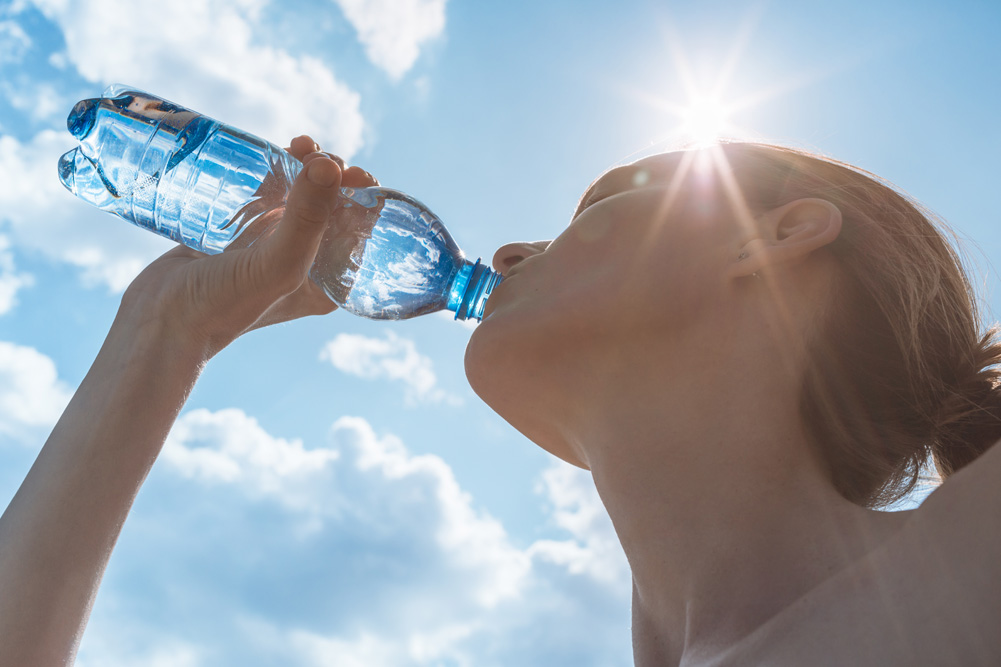 In worst-case scenarios, heat exhaustion and heat stroke can occur when the body loses the fluids that it needs to function properly. Dehydration can be prevented and treated through the following:
The treatment that doctors usually recommend among dehydrated patients is fluid-replacement therapy. This includes an oral rehydration solution or ORS and intravenous solution administration. However, don’t self-medicate or administer these treatments yourself. You must see a health professional or medical director first.
The symptoms following dehydration include thirst, muscle cramps, dark-colored urine, reduced urine output, cold and dry skin, headache, and restlessness. Recognizing the early signs of dehydration and taking measures to prevent it is necessary for a healthy lifestyle. Lastly, it is important to drink enough water to replenish your bodily fluids that are lost as you go about your day.