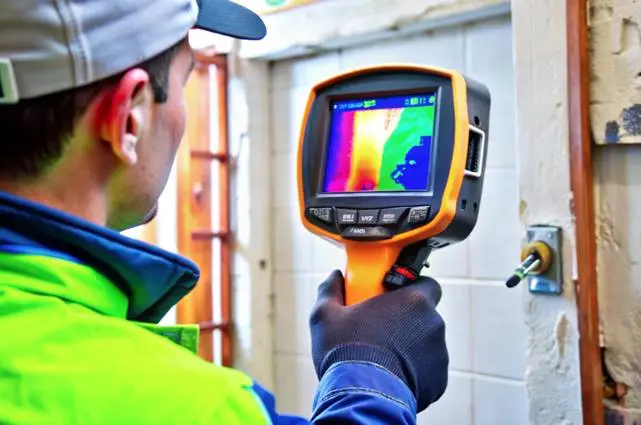
Ultrasonic inspection is presently a routine method in non-destructive testing (NDT) that detects internal faults in materials without damaging the object being inspected. With industries demanding higher standards of safety, accuracy and quickness, hardware employed for ultrasonic inspection has evolved. Present systems now offer much more than simple flaw detection — they offer accurate details about internal composition of elements and allow engineers to make faster decisions.
Whether in energy and aerospace, manufacturing, and infrastructure, ultrasonic inspection is used to examine castings, welds, pipelines, and composite materials. The accuracy of the output takes directly from the quality of the equipment employed. That is why mission-critical maintenance or production companies rely on efficient ultrasonic test systems for precision and repeatability.
What Makes Advanced Systems Unique
Advanced ultrasonic testing equipment is in a different class altogether from its predecessors. Modern machines are small, powerful and capable of recording detailed information with minimal effort by the technician. Phased array units, for example, now offer high-resolution, real-time images that allow technicians to visualize flaws and thickness variations in real time, as opposed to simply interpreting signals.
This level of accuracy not only speeds up inspections but also reduces the risk of human error. Operators can view cross-sections of materials, measure defect dimensions, and track corrosion trends — all with a level of detail that would have been difficult to achieve a decade ago.
Software on these machines is equally as important as hardware. High-end signal processing, reporting software that automates, and cloud data system compatibility are now the norm in most systems. This allows inspection teams to collect and see the results in a timely manner, even across locations or departments.
Built for Industrial Environments
Ultrasonic testing is often done in less-than-easy conditions — on sea platforms, in aircraft hangars, at high elevation or subterranean. High-technology equipment is designed with such things in mind. Ruggedized housings, long battery life, and waterproof or shockproof operation enable these instruments to operate effectively in challenging conditions.
Most models also have user-friendly interfaces that reduce the learning curve for new users, but retain advanced options for experienced techs. Touchscreen use, step-by-step setup modes and onboard calibration tests all serve to streamline inspection steps and make them faster and simpler. When time is of the essence and access is limited, these features become more than an amenity — they guarantee right-the-first-time inspections.
Wireless connectivity is similarly common as an option. It enables results to be sent to a central manager or database directly when measured, avoiding the need to transport USB drives or paper records. For companies with many locations or that must comply with strict regulations, this traceability is a real advantage.
Applications That Require Precision
Ultrasonic inspection is most critical in industries where even the slightest defect could have catastrophic consequences. In aerospace, it’s used to detect cracks in turbine blades and airframes before they can harm. In energy, it ensures that pipelines and pressure vessels remain safe under extreme conditions. In manufacturing, it guarantees uniform quality in anything from automobile components to household products.
Better quality ultrasonic test equipment enables tests to be done more efficiently and with greater confidence. It enables predictive maintenance plans to be made whereby historical inspection data is used to forecast wear and schedule repairs before failure. Reactive maintenance is eliminated by moving from this to preventative maintenance, which reduces downtime and eliminates the potential for catastrophic failure.
Investing in Quality Means Fewer Risks
With inspection standards becoming more stringent and materials increasing in sophistication, being equipped with the right ultrasonic testing gear is paramount. Top-end systems do more than detect defects — they provide accurate, reliable information upon which key decisions can be based. For organizations where safety, compliance and performance are of highest concern, investing in next-generation ultrasonic testing technology is not just a technological leap — it’s a long-term promise.