Photo credit: Josh Wiseman
Before Amy Scott Rooker became a corporate attorney, before the executive titles and the ladder climbing, there was a child who learned that the only way to be safe was to be exceptional. To achieve. To compress everything tender inside herself and replace it with credentials and output. That early decision, made beneath the level of conscious thought, shaped the next two decades of her life. It would also, eventually, ask to be undone.
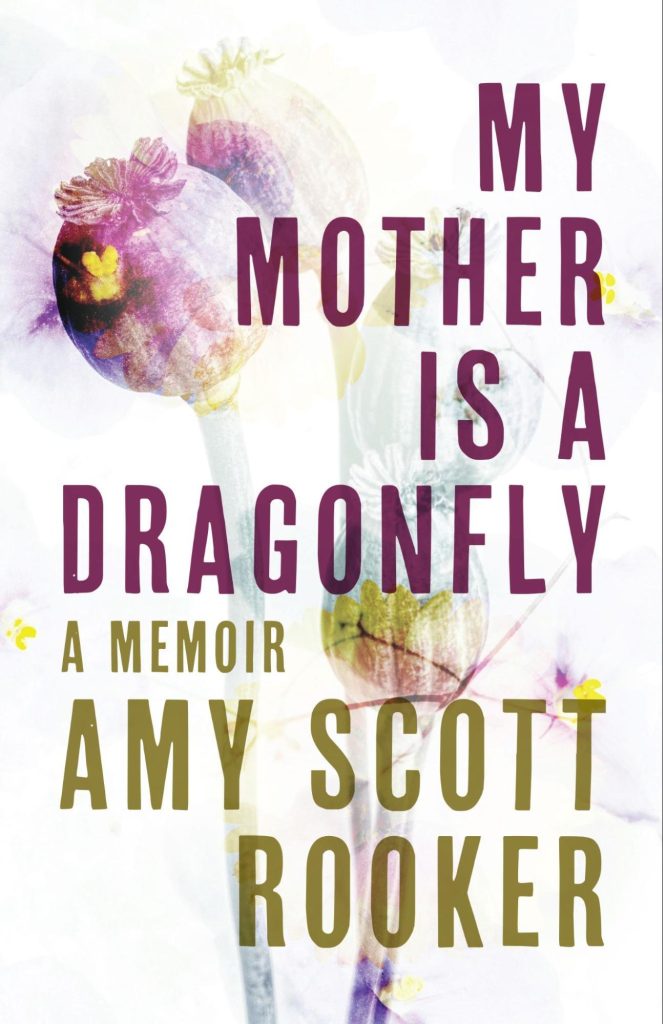
That’s the story she tells in her memoir, My Mother Is a Dragonfly.
“When I was fourteen, something happened that split me from myself,” Rooker writes. “One version of me stayed behind—hurt, terrified, fiercely real. The other one went on without her. That’s what trauma does: it freezes a part of you in time, and the rest of you learns how to survive around the absence.”
In her memoir, Rooker recounts childhood sexual abuse that fractured her sense of self and set in motion a decades-long pattern of silence and survival. When she told her mother what had happened, the response she received left her feeling unprotected and alone.
As she describes it, from there, two versions of her emerged: the one who ached, and the one who performed. The one who remembered, and the one who tried not to. She did what children often do when the world becomes unsafe. She adapted. The strategy that carried her forward was achievement.
Rooker excelled academically, earned a law degree and an MBA, and built a career that looked, from the outside, like success. She learned how to perform competence and composure in high-stakes environments.
But beneath that success was a quieter reality.
“The version of me that kept going wasn’t my true self,” she writes. “It was the one who learned how to survive.”
For Rooker, achievement became armor. Law school. Prestigious positions. Perfectionism worn as identity. An eating disorder that was never just about food. White wine that let her never look too closely.
The trauma that divided her as a teenager into the good girl the world could accept and the angry girl who had nowhere to go later reappeared as the impressive woman the world admired—and the invisible one who carried the pain. The coping strategies that kept her alive in childhood had become the walls that confined her in adulthood.
When her mother died, the structure Rooker had built her life around began to crack. Their relationship had stabilized in adulthood, but only on the condition that the past remain untouched. Her mother’s death closed the door on the apology and reckoning Rooker had longed for and feared in equal measure.
She began searching for a way to heal what therapy and willpower alone had never fully reached. That search eventually led her to psychedelics—specifically, psilocybin—the psychoactive compound found in “magic mushrooms.”
Cover image courtesy of GFB
During her first guided psilocybin journey with a shaman she’d found through her therapist, Rooker describes moving through terror, grief, and long-buried emotional pain before arriving somewhere she had never been able to reach on her own. She encountered her mother—not as she had known her in life, but as a radiant presence beyond defensiveness or denial. In that space, her mother finally offered the apology that had never come while she was alive.
More followed. She relived the moment of her teenage trauma while hearing the words she had needed all her life: This is not your fault. She encountered her inner child not as someone broken or abandoned, but as fierce, joyful, and wholly intact. At the end of the journey, she experienced what she describes as a golden-white field of living love—God, Source, the life force itself—through which she understood, not intellectually but viscerally, that she was not broken. She was whole.
The experience did not erase the past. It did something harder and more useful: it interrupted the story she had been living inside for decades. It gave her access to self-compassion, to forgiveness, and to a reality larger than trauma.
But even then, the journey was only a beginning.
Rooker’s memoir makes clear that while psychedelics can be profound, the real transformation happens afterward.
“Real healing isn’t a six-hour trip that rewrites your life,” Rooker says. “It’s the quiet, repetitive labor of going to the source of the pain and not turning away. Of integration. Of learning to hold pain in one hand and love in the other.”
For Rooker, integration required an honest and total assessment of the life she had built. Which parts of it were truly hers? Which belonged to the world around her—to conditioning, performance, fear?
She began changing things quietly but completely. She stopped drinking after a moment of unmistakable inner clarity on a walk. There was no dramatic vow, no formal sobriety plan. She simply knew alcohol no longer belonged in her life, and that night she poured the bottles down the sink.
She stepped away from the constant stream of social media and news. She began meditating. She paid close attention to the loops of thought that had governed her inner life for years and began replacing them with language that reoriented her back toward truth rather than self-attack. She turned toward practices that brought her back into her body instead of farther away from it.
Over time, something else began to loosen: the depression she had carried for years. What she eventually saw was that much of what she had called depression was unprocessed rage, grief, and pain that had never been allowed to move through her. Through integration, it slowly began to release.
Rooker now describes plant medicine not as a cure, but as a sacred catalyst: a way of reconnecting with the parts of the self trauma forced into exile. The deeper healing came afterward—in therapy, in reflection, in changed behavior, and in the slow rebuilding of a life that finally felt like her own.

Photo credit: Josh Wiseman
In My Mother Is a Dragonfly, Rooker traces the arc from childhood trauma and high achievement to identity collapse, forgiveness, and self-return.
The journey did not erase the past. It changed her relationship to it.
For years, she believed her trauma had broken her, and perfection might save her. What she came to understand was something else entirely: healing was not about becoming someone new. It was about remembering who she had been before survival taught her to forget.