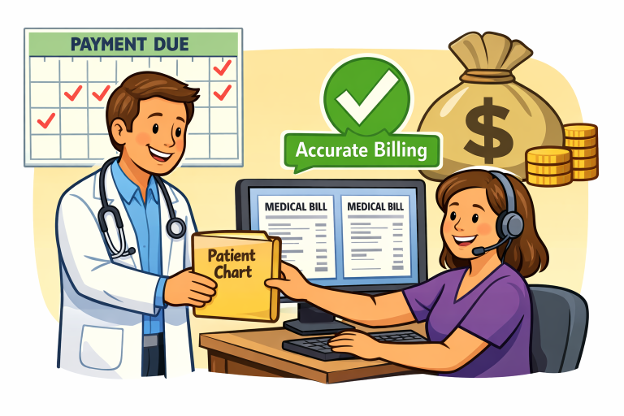
In the complex world of healthcare administration, accurate medical billing stands as a critical function for every provider. Proper billing processes not only ensure the financial stability of a practice but also make it possible to maintain compliance, mitigate legal risks, and improve patient experiences. Given the increasing scrutiny of healthcare costs, healthcare organizations must consistently prioritize accuracy and transparency. Efficient medical billing services, such as ACU-Serve, support practices in streamlining their billing workflows and reducing costly errors.
Errors in medical billing can quickly snowball, leading to serious financial, legal, and reputational issues for providers. As payment regulations evolve and patients become more informed about their healthcare expenditures, the need for reliable billing systems has never been greater. Administrators and billing professionals must be diligent, employing the latest technology and best practices to protect both their bottom line and their community’s trust.
Medical billing inaccuracies can significantly impact a provider’s revenue stream and threaten sustainability. These errors often result in delayed payments, denied claims, or even recoupment of previous reimbursements. A study from The New York Times found that hospitals received billions of dollars in extra payments from insurers and federal programs by coding for higher-intensity care than what was actually provided. This “upcoding” trend resulted in a 41 percent rise in the highest-category discharges between 2011 and 2019, inflating healthcare costs nationwide and threatening relationships with insurers and government payers.
Not only do billing errors hurt providers financially, but they also harm industry credibility. Insurance companies have increased audits and denials for suspicious claims, leaving healthcare organizations chasing lost revenue and facing possible allegations of fraud.
The complexity and regulatory oversight of healthcare billing make compliance a constant challenge. Regulatory agencies and payers scrutinize claims aggressively, flagging those that do not align with medical necessity or fail to meet coding standards. The introduction of federal measures, such as the No Surprises Act, has further complicated the landscape. This act requires providers and insurers to settle payment disputes independently of patients, but enforcement inconsistencies remain widespread. Recent reports highlight that some insurers are failing to honor arbitration decisions, delaying provider payments, and increasing administrative strain for healthcare organizations.
Transparent and accurate billing does more than smooth financial operations. It plays a central role in the patient experience. Patients are increasingly vigilant about understanding what they owe and the services billed. When errors occur, they can quickly lead to frustration, delayed payments, and even complaints to regulators. For patients, easily understandable, precise bills signal respect and professionalism, helping providers uphold a positive reputation in their community and encourage patient loyalty.
Patients who encounter repeated billing issues or unexpected charges are much more likely to leave negative reviews or switch providers, making it crucial for healthcare practices to address and resolve billing challenges proactively.
Continual improvement is a hallmark of top-performing billing teams. Some of the most effective strategies for reducing billing errors and denials include:
Another essential consideration for billing teams is the importance of robust denial management procedures. Implementing a system to track, analyze, and appeal denied claims can restore lost revenue and highlight patterns that indicate deeper workflow issues. Healthcare organizations flourish when they approach billing as a continuous quality improvement cycle: identify errors, address root causes, monitor processes for future risks, and always look for ways to optimize. Additionally, engaging patients in the billing process by offering educational resources, transparent statements, and accessible support can demystify their financial responsibility and minimize friction.
Technology has reshaped the medical billing landscape, making it easier to prevent and detect errors before claims reach insurers. Electronic health records (EHRs), automated coding tools, and artificial intelligence-powered analytics all serve as safeguards against common mistakes. These systems can match clinical documentation to appropriate codes, highlight inconsistencies, and reduce duplicate or missing claims. Industry leaders report that integrating such tools into billing workflows can cut denial rates and improve average payment turnaround times significantly.
In addition to streamlining coding and claim submission, advanced billing technology can also deliver real-time reporting and insights. These analytics features allow billing managers to rapidly identify trends, such as spikes in denials or payment delays, enabling them to make data-driven decisions. By using predictive analytics and machine learning, healthcare providers can forecast where billing errors are most likely to occur and proactively target training or workflow adjustments. The end result is not just fewer mistakes but also more resilient and scalable revenue cycle management, regardless of the healthcare organization’s size.
Accurate medical billing practices are fundamental to any healthcare provider’s long-term success. With strict regulatory environments, complex payer contracts, and discerning patients, diligent attention to detail in the billing cycle safeguards both the organization’s finances and its reputation. By prioritizing staff education, embracing modern technology, and maintaining open communication, healthcare providers can ensure compliance and build lasting trust with their patients.
Ultimately, medical billing should be viewed as a dynamic and evolving discipline within healthcare administration. Regularly reviewing industry updates, legal precedents, and payer-specific rules empowers billing teams to respond fluidly to new challenges. Investing in staff development, technology adoption, and patient engagement ensures that healthcare organizations are well-positioned to thrive in an increasingly competitive and transparent healthcare market. Forward-thinking providers recognize that accurate billing is not merely an operational necessity but a strategic asset that supports the financial, legal, and interpersonal stability of the entire care ecosystem.