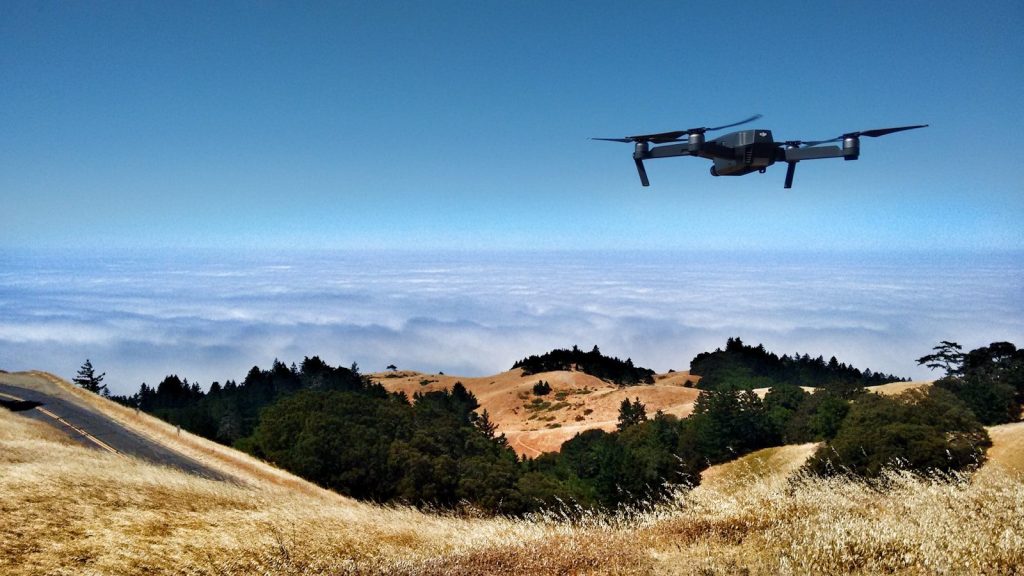
You see them more often now than you used to. A drone hovering above a power substation. One circling a rooftop solar array. Another zigzagging across a stretch of railroad track that runs through your town. The drones themselves get most of the attention, but the actual flight is often the least interesting part of the operation. The interesting stuff happens before the propellers ever start spinning.
Most commercial drone flights are run by people who do this for a living and who answer to clients, regulators, and insurance carriers. Those audiences want very specific evidence that the operation was conducted properly. The result is a quiet industry of paperwork, planning, and recordkeeping that almost nobody outside the field ever sees.
Modern operations rely on specialized software to manage all of it. Platforms like flybyops.com act as the system of record for professional drone teams, tracking every flight, every piece of equipment, every risk assessment, and every incident under a single workspace. The reason this kind of tooling exists at all is because of just how much happens before any given drone leaves the ground.
The drone industry quietly grew up over the last decade. The companies running professional flights today are not what most people picture.
Utility companies maintain entire drone teams for power line inspection. A single utility might run hundreds of flights per month, examining transmission towers, distribution lines, and substations that would otherwise require a lineman with binoculars or a helicopter with thermal imaging.
Wind and solar farm operators run drone inspections across their assets to spot panel defects, blade damage, and overgrowth before they cause yield loss. A single wind turbine inspection might involve four to six flights from different angles, all logged and tracked.
Rail and infrastructure operators inspect bridges, tunnels, and trackbeds that are difficult or dangerous for ground crews to reach. Those flights feed into asset management systems that engineers rely on to schedule maintenance.
Land surveying and GIS firms use drones to produce centimeter-grade maps of construction sites, mining operations, and large parcels of land. The deliverable is usually a 3D model or a high-resolution map, but the underlying work is a flight operation with all the paperwork that goes with it.
Public safety agencies use drones for situational awareness during fires, missing person searches, and accident reconstruction. Some of the newer programs use drones as first responders, dispatched from rooftop docks before officers physically arrive on scene.
In every one of these examples, what looks like a drone flying over something is actually the visible tip of an operation that involves planning documents, certifications, equipment registries, and a paper trail.
A professional drone flight in the United States typically requires several pieces of documentation to be ready before anyone touches a controller.
The remote pilot certificate. Under FAA commercial drone rules, the person flying the drone needs to hold a current remote pilot certificate. The certificate has to be renewed through recurrent training every two years to stay active.
Aircraft registration. Every drone weighing more than 0.55 pounds and used commercially must be registered with the FAA and marked with its registration number. Larger operations track this in an equipment registry alongside controllers, batteries, and chargers.
Airspace authorization. If the flight will take place in controlled airspace, the operation needs to be authorized through a system called LAANC, which often runs in real time but sometimes requires a longer waiver process. If the flight is over people, at night, or beyond visual line of sight, additional approvals are needed.
A risk assessment for the specific job. Many operators use a five-by-five severity-by-likelihood matrix borrowed from European drone regulation, even when flying in the US, because it forces them to think through what could go wrong and what they would do about it. The risk assessment lives in the operational record alongside the flight itself.
Documents the client may have asked for. Pipeline inspections, utility flights, and any work on a controlled site usually require the operator to demonstrate insurance, signed NDAs, training records for the assigned pilot, and sometimes proof of background checks.
By the time the drone is unfolded and the propellers are seated, several people have already created or reviewed half a dozen records. None of those records are visible to anyone watching the flight from below.
The flight itself produces data on multiple levels.
The drone is recording its own telemetry. GPS position, altitude, ground speed, battery voltage, link quality, and a dozen other parameters get logged continuously. All of that lives in a flight log that can be replayed and reviewed.
The pilot is recording a flight record. Date, time, location, takeoff and landing coordinates, duration, payload carried, and any anomalies that happened during the operation. Modern platforms capture some of this automatically, but pilots still verify it before closing out a flight.
The ground crew is recording their own observations. Weather changes, crowd movements at the perimeter, any communication with air traffic, and any aborts or delays.
If anything goes sideways, an incident report gets filed against the specific flight. Near misses, equipment malfunctions, lost link events, and contact with anything other than air all get their own record. Some operators allow anonymous incident reporting, which is sometimes the only way to surface certain problems before they become enforcement actions.
Every one of these records eventually ends up tied to the project, the job, the aircraft, and the pilot inside the operations platform. A regulator showing up two years later asking what happened on that one Tuesday afternoon can be answered in minutes instead of weeks.
A few different audiences are watching, and each of them cares about a different piece of the record.
Regulators care about whether the operation followed the rules. They want to see that the pilot was certified, the aircraft was registered, the airspace was cleared, and the operation was conducted within the authorized parameters.
Clients care about whether the firm they hired is professional. RFPs from serious clients now ask for evidence of compliance frameworks, training records, insurance coverage, and incident response procedures. A response that boils down to “we have a pilot and a drone” no longer wins business.
Insurance carriers care about whether the operator actively manages risk. Underwriters get sharper every year about what they consider acceptable evidence. A risk register, a maintenance log, and an incident reporting trail are often the difference between renewing coverage at a normal rate and not renewing at all.
Are commercial drone pilots required to keep flight records?
The FAA does not technically mandate a universal flight log, but commercial operators are required to maintain records that prove compliance, including pilot credentials, aircraft registration, Remote ID documentation, and flight details when relevant. Most professional programs treat detailed flight logs as standard practice, both for compliance and for their own internal management.
Can anyone become a commercial drone pilot?
In the United States, anyone over sixteen who passes the FAA’s aeronautical knowledge test can earn a remote pilot certificate. The test covers airspace, weather, regulations, and operational procedures. The certificate has to be renewed every two years through continuing education.
Why do utility and energy companies use drones so much?
Drones reduce the need to send workers up towers, into substations, or onto rooftops to perform inspections. A drone can cover a transmission line corridor in a fraction of the time a ground crew can, capture better data along the way, and surface defects before they cause outages. The economics are usually obvious within the first year.
What happens if a drone crashes during a commercial flight?
The operator files an incident report against the specific flight, documents what happened, retrieves the aircraft, and reports the event to the FAA if it meets the threshold for reportable accidents. The flight record, the maintenance log for the aircraft, and any relevant training records get pulled together for the post-incident review. Insurance carriers usually want this whole package within a few days.
What looks from the outside like a hobby that grew up looks from the inside like a working profession that has been quietly building its own infrastructure for nearly a decade. The pilots, the platforms, the paperwork, and the regulations all evolved alongside each other. The next time you see a drone hovering near a wind turbine or sweeping over a railroad bridge, the flight itself is the smallest part of what is actually going on.