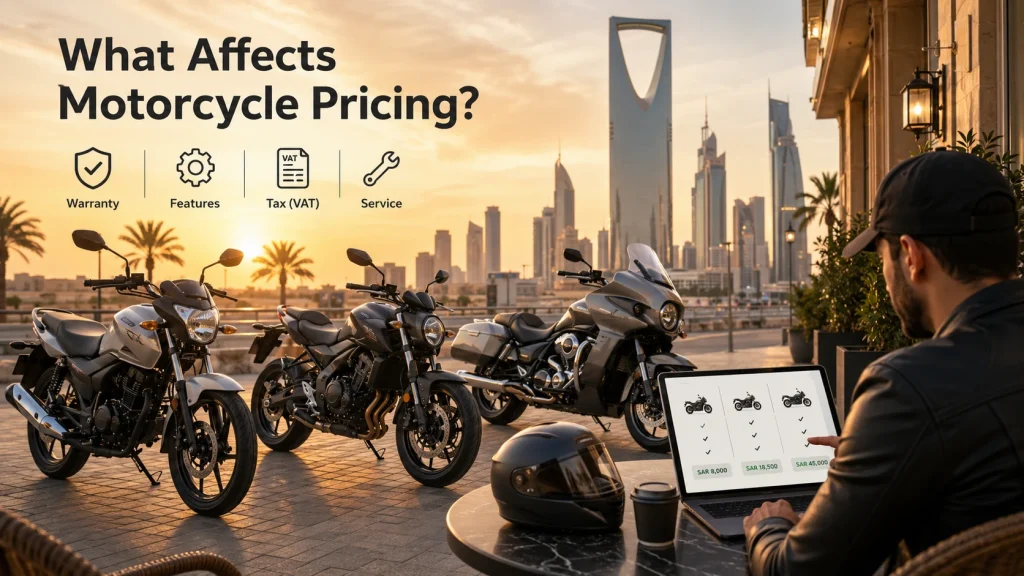
Once you decide to buy motorcycles in Saudi Arabia, pricing becomes less mysterious if you know what the number is actually paying for: taxes, logistics, spec level, dealer support, and warranty. Saudi VAT is 15% for most goods and services, which alone can noticeably shift the final checkout price.
A lightweight commuter, a touring bike, and a liter-class roadster do not play the same game. When you compare a new motorcycle for sale in Saudi Arabia, the segment sets the baseline because it changes the frame, braking package, cooling needs, and feature expectations.
A commuter bike is often priced around practicality and affordability. A touring bike usually carries extra cost in comfort-focused parts and stability at highway speed. A performance street bike tends to push price up through higher-spec components and stronger braking.
A big part of motorcycle cost in Saudi Arabia is the “landed cost,” meaning what it takes to import or supply the bike into the country and sell it legally. VAT at 15% is the obvious layer customers feel at checkout.
Depending on how the bike is sourced and classified, customs duties and shipping can also shape pricing, especially for heavier models or premium brands. Even when two bikes look close on paper, the one with higher shipping cost or higher declared value can land in a higher price bracket.
When you’re buying a motorcycle, it’s easy to focus on engine size and miss the quiet price drivers that affect daily riding. ABS, better suspension, stronger brakes, cooling built for heat, and higher-quality components can raise prices even if the cc number stays the same.
A concrete example is the Honda PCX160 line in Saudi listings. The PCX160 ABS is shown at SAR 9,805, while the PCX160 CBS (linked brakes) is shown at SAR 8,325 — same 160cc class, but the ABS-equipped version costs more because the braking system and safety package are higher-spec.
Some brands price around premium feel and long-distance comfort. Others price around sport handling and sharp response. Some focus on value with broad model coverage, which can make a mid-range bike feel like a smart buy.
This matters because motorcycle cost in Saudi Arabia often includes the brand promise. You are paying for service network strength, perceived reliability, resale expectations, and how confidently the brand backs the product. In real life, that promise only has value if it’s supported locally with parts availability and qualified service.
Buying motorcycles online can change the price story because online catalogs make offers and price changes more visible. A store may run limited-time discounts, bundle offers, or “online-first” deals that don’t show up the same way in a showroom conversation.
Online browsing also makes it easier to compare multiple models quickly, which can push you toward better value. If you see two bikes close in price, you can check which one includes stronger warranty support, clearer delivery terms, or better after-sales service.
When you’re buying motorcycles online, the dealer behind the listing matters almost as much as the bike. A model with strong local support can cost more upfront, but it often feels cheaper to own because parts arrive faster and service is easier to book. That support is a real piece of motorcycle cost in Saudi Arabia, even if it’s not printed on the price tag.
Some real-life dealer examples in KSA that show what “local support” looks like:
Why this matters in practice: when people complain about “expensive bikes,” they often mean “expensive ownership.” A cheaper bike can become costly if parts are slow, service is limited, or warranty handling is unclear—while a slightly higher-priced option with strong dealer support can save money and time later.
On the Sharmax Saudi catalog, pricing is driven by segment and purpose. The lineup stretches from city-friendly scooters like the Scooter Tank 150 to higher-performance on-road motorcycles such as the Custom 1000 RST Roadster, so the “why does this cost more?” question is usually answered by equipment level, displacement class, and intended riding style.
Another built-in price factor is after-sales coverage. In Saudi Arabia, Sharmax positions its vehicles as coming with a 3-year warranty, and its warranty framework is designed around authorized service centers and documented scheduled maintenance.
Affordability is also shaped by how the purchase can be structured. Sharmax publicly promotes installment and buy-now-pay-later options (including Tabby and Tamara, plus bank installment plans), which changes how many buyers experience the “real price” month to month.
Finally, the product portfolio itself is built with the Gulf in mind. Sharmax repeatedly frames its development approach around regional realities like terrain and climate, which influences spec choices and, in turn, pricing across the GCC-oriented range.
If you want to buy motorcycles without overpaying, compare bikes inside the same segment, then look at what the price includes: taxes, support, warranty, and real-world components. A cheaper option can be perfect when your use is simple. A higher price usually makes sense when it buys you comfort, stronger specs, and smoother ownership, especially in Saudi heat and daily traffic.