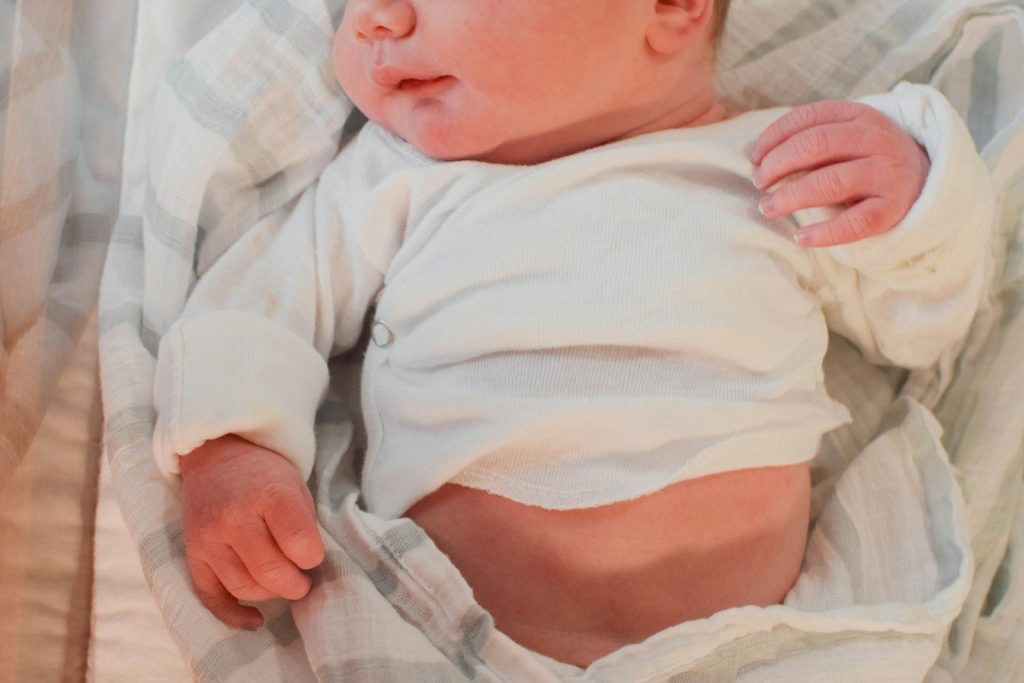
No, IVF babies do not look different because of IVF itself. Children conceived through IVF look like other children because appearance is determined mainly by genetics, not by whether fertilization happened in a laboratory or through natural conception.
One common myth is that IVF creates a special “look.” There is no scientific basis for that idea. IVF changes where fertilization happens, but it does not change inheritance, facial structure, eye color, hair texture, or other genetic traits.
The question “why do IVF babies look different” usually comes from a misunderstanding of the procedure. IVF can sound technical and unnatural: eggs are retrieved, sperm is prepared, embryos are cultured in a laboratory for several days, and then an embryo is transferred into the uterus.
But after transfer, embryo development follows the same biological principles as any other pregnancy. The embryo implants, grows in the uterus, and inherits physical traits from the people whose egg and sperm were used.
Current research does not support the idea that children conceived through IVF have a separate “IVF look.” A 2024 review of IVF and children’s neurocognitive development discusses long-term child development after IVF, while CDC’s ART surveillance report focuses on outcomes such as preterm birth, low birth weight, and multiple births. These sources discuss health and development, not any reliable physical marker showing that a child was conceived through IVF.
An IVF baby’s appearance is determined by the same factors as any other child’s appearance: inherited genes, random genetic recombination, and normal fetal development.
| Factor | How it affects appearance |
| Egg genetics | Provides half of the child’s DNA and affects traits such as facial structure, eye color, hair color, and potential height. |
| Sperm genetics | Provides the other half of the child’s DNA and combines unpredictably with the egg’s genes. |
| Embryo development | Affects implantation and early growth, but does not create a separate “IVF appearance.” |
| Pregnancy environment | Can affect fetal growth and birth weight, but does not create a special visual type caused by IVF. |
| Donor eggs or donor sperm | If donor eggs or donor sperm are used, the child may resemble the donor because the donor provides genetic material. This is about genetics, not the IVF procedure. |
The last point matters. If donor eggs or donor sperm are used in IVF, the child may resemble the donor. That is not because IVF changes appearance, but because appearance follows the genetic material used to create the embryo.
IVF babies can look like their parents if the parents’ own egg and sperm were used. In that case, the child inherits genes from both parents, and physical resemblance works the same way it would after natural conception.
If donor genetic material is used, the situation is different. For example, if the intended mother carries the pregnancy but the egg came from a donor, the child does not inherit her DNA through the egg. She may still be connected to the child through pregnancy, birth, care, and parenthood, but physical resemblance depends on the genetic source of the egg and sperm.
This is why donor selection can be an important part of the process for intended parents. When comparing an American egg donor bank, people usually look not only at photos, but also at medical screening, family history, physical characteristics, biographical details, egg availability, and clinic coordination. These details help parents make a more informed decision before treatment begins.
Cost should also be considered early, but not as the only factor. Before comparing clinics, egg cohorts, medications, and embryo transfer fees, it helps to understand what donor egg bank USA cost usually includes and which expenses may be separate. This makes it easier to compare options without focusing only on the headline price.
Even when pregnancy does not change the genetics of the egg, it still has emotional and biological meaning. The intended mother provides the uterine environment, goes through pregnancy and birth, and builds a relationship with the child through care and daily family life.
No, IVF babies do not look different than normal babies because IVF does not create a separate type of appearance. The word “normal” can also be misleading here, because children conceived through IVF are not outside the normal range of human development.
Some IVF pregnancies may need closer monitoring, especially when there are factors such as maternal age, multiple pregnancy, or underlying infertility. But that is different from saying that IVF changes how a child looks. The child’s appearance still comes from genetics and normal development.
Here are some common myths about children conceived through IVF and why they are not supported by scientific evidence.
| Myth | Why it is not true |
| IVF babies look artificial or different. | No. IVF changes the place of fertilization, not the rules of inheritance. |
| IVF babies are always weaker. | Incorrect. Most children conceived through IVF are healthy, although some ART pregnancies require closer monitoring. |
| IVF babies cannot look like their parents. | They can, if the parents’ own gametes are used. With donor eggs or sperm, resemblance depends on the genetic source. |
| Laboratory culture changes the baby’s face. | There is no strong evidence that embryo culture creates a distinct facial appearance. |
| Children conceived with donor eggs cannot feel like “your child.” | Genetics matters, but parenthood also includes pregnancy, birth, care, attachment, and daily family life. |
Scientific literature does not support the idea that IVF children have a special appearance because of the procedure itself. Research more often discusses medical outcomes, such as pregnancy course, preterm birth, low birth weight, multiple pregnancy, and long-term health follow-up. These issues are important, but they do not mean IVF creates a separate visual type.
For example, the CDC’s 2022 ART surveillance report reports on outcomes such as singleton births, twin births, low birth weight, and preterm birth among ART-conceived infants. These are medical outcomes, not visual traits. The safest conclusion is simple: if a child looks different from one parent, the reason is usually genetics, donor material, or normal hereditary variation, not the IVF procedure itself.
The safest conclusion is simple: children conceived through IVF do not look different because they were conceived through IVF. If a child does not resemble one parent, the reason is usually genetics, donor material, or normal hereditary variation, not the IVF procedure itself.