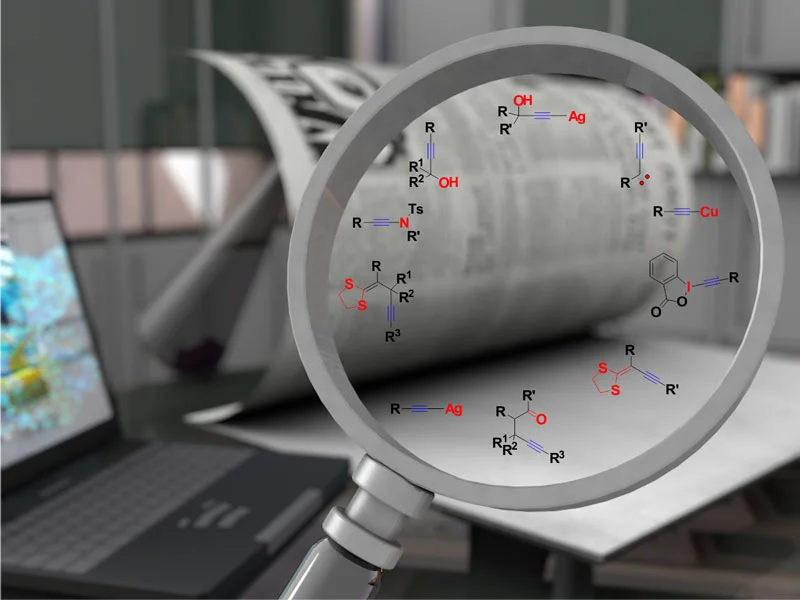
Scientific progress depends not only on generating new knowledge but also on communicating that knowledge effectively. As research becomes increasingly interdisciplinary and data-driven, scientists face the challenge of explaining sophisticated concepts to audiences with different levels of expertise. Scientific illustrations and animations have become essential communication tools that translate complex information into clear, accurate, and visually engaging content.
From academic journals and university classrooms to biotechnology companies and science museums, scientific visualization is now a critical component of modern knowledge transfer. It helps researchers present discoveries, educators explain difficult concepts, and organizations communicate innovation with greater clarity and impact.
Modern scientific research produces enormous amounts of information. Experimental results, computational models, molecular structures, and environmental data often require extensive interpretation before they can be understood by others. While tables and statistical analyses remain important, visual communication provides a faster and more intuitive way to present scientific findings.
Scientific illustrations https://scientific-illustrations.com simplify complex subjects without sacrificing accuracy. Every visual element is intentionally designed to emphasize important relationships, structures, and processes while eliminating unnecessary detail. Rather than reproducing reality exactly, illustrations reveal the information that matters most.
For example, a biological illustration may highlight intracellular structures that cannot be distinguished in microscopic photography. A geological cross-section can reveal underground formations that are impossible to observe directly. Similarly, engineering illustrations clarify the interaction of individual components within complex mechanical systems.
This ability to combine precision with clarity makes scientific illustration an indispensable tool for scientific communication.
Many scientific phenomena cannot be adequately represented by static images because they involve continuous movement and interaction. Scientific animations provide a dynamic perspective that allows audiences to observe processes as they develop over time.
Animations are particularly valuable when explaining molecular biology, environmental systems, fluid dynamics, astronomical events, or engineering simulations. Instead of describing complex interactions through text, animations demonstrate them visually, making abstract concepts easier to understand.
For example, an animation can illustrate how proteins change shape during cellular signaling, how tectonic plates move beneath the Earth’s surface, or how airflow changes around an aircraft wing. These visualizations help viewers understand mechanisms rather than simply memorize outcomes.
Because animation introduces sequence, timing, and motion, it significantly improves conceptual understanding in both educational and professional settings.
Scientific journals increasingly recognize the importance of high-quality visual communication. Graphical abstracts, conceptual diagrams, and scientific figures allow readers to grasp the central message of a study before examining detailed methodology and data.
Illustrations also improve interdisciplinary collaboration. Researchers from different scientific backgrounds often use specialized terminology that may not be familiar outside their own discipline. A carefully designed illustration creates a universal visual language that enables scientists from biology, chemistry, engineering, medicine, and environmental science to communicate more effectively.
Conference presentations likewise benefit from professional scientific visualization. Complex experimental workflows, computational models, and research findings become significantly easier to present when supported by custom illustrations and animated sequences.
Visual learning has become one of the most effective approaches in science education. Scientific illustrations help students organize information into logical structures, while animations explain processes that are difficult to imagine through text alone.
Subjects such as genetics, microbiology, ecology, astronomy, chemistry, and physics often involve concepts that exist outside direct human observation. Illustrations make invisible structures visible, while animations demonstrate how these systems function over time.
Interactive educational content further enhances learning. Three-dimensional scientific models allow students to rotate, explore, and examine structures from different perspectives. Animated simulations encourage experimentation by allowing learners to manipulate variables and observe outcomes in real time.
This combination of visualization and interaction supports critical thinking while improving long-term knowledge retention.
Scientific illustrations and animations https://scientific-illustrations.com/portfolio/animation are no longer limited to universities or scientific publications. Biotechnology companies use them to explain innovative technologies and biological mechanisms. Environmental organizations rely on visual storytelling to communicate climate research and conservation initiatives. Engineering firms create technical animations that demonstrate product functionality, manufacturing processes, and system design.
Museums and science centers incorporate interactive visualizations into exhibitions that engage visitors of all ages. Government agencies use scientific graphics to explain environmental policies, public health recommendations, and technological developments. Commercial organizations also employ scientific visualization to communicate product innovation, sustainability initiatives, and research achievements to investors and stakeholders.
Because visual communication transcends language barriers, scientific illustrations have become valuable tools for international collaboration and global science outreach.
Technological advances continue to expand the capabilities of scientific visualization. Three-dimensional modeling software enables artists and scientists to create highly accurate digital reconstructions based on experimental data, imaging technologies, and computational simulations.
Virtual reality (VR) and augmented reality (AR) provide immersive environments where users can explore molecular structures, geological formations, engineering systems, or astronomical phenomena from entirely new perspectives. These technologies are transforming education, research, and professional training.
Artificial intelligence is also influencing visualization workflows. AI-powered tools can accelerate data processing, assist with model generation, and automate repetitive production tasks. Rather than replacing scientific illustrators, these technologies enhance efficiency while allowing specialists to focus on scientific interpretation, design quality, and visual storytelling.
Scientific illustrations and animations have become fundamental tools for communicating research in an increasingly complex scientific landscape. They transform abstract concepts into understandable visual experiences that support education, innovation, interdisciplinary collaboration, and public engagement.
As scientific discoveries continue to accelerate, the ability to communicate them effectively will become even more important. Professional scientific visualization bridges the gap between raw data and human understanding, ensuring that knowledge is not only generated but also shared, understood, and applied across disciplines and industries.