Many people think of balance as something they can figure out later. They assume that once life slows down, they’ll finally have the time to focus on routines, health, and everything else that keeps getting pushed aside.
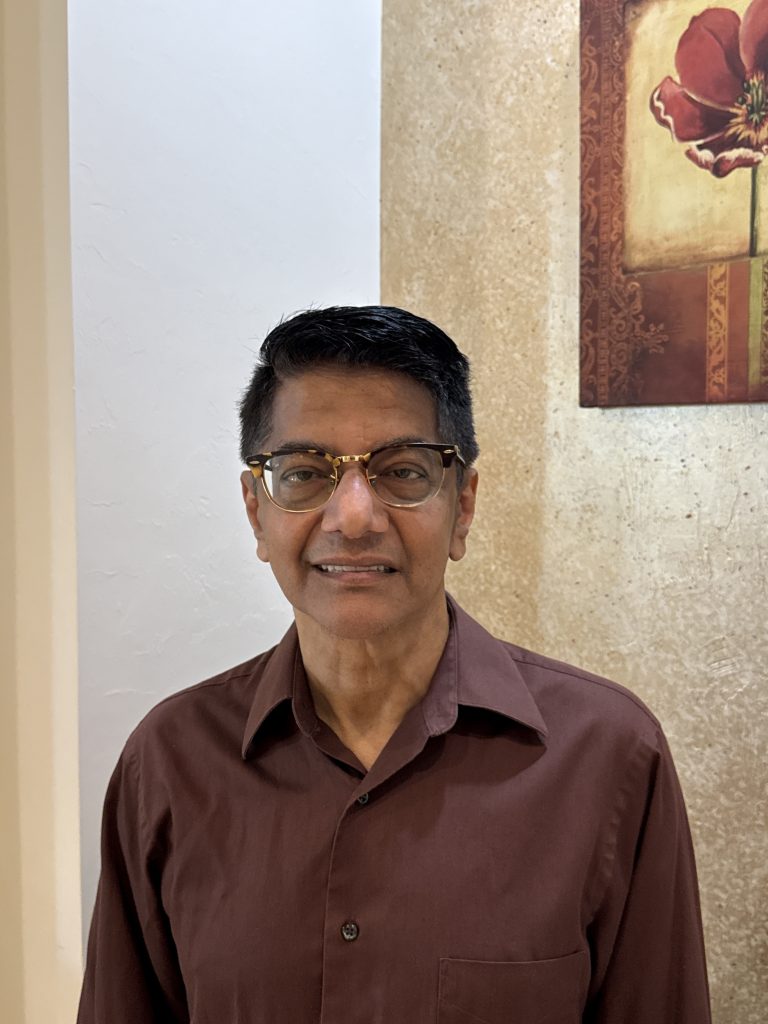
Asif Choudhury, MD, doesn’t see it that way.
In his experience, life rarely slows down. Work, family, and other responsibilities overlap, pulling people’s attention in multiple directions.
In reality, balance doesn’t simply appear when things get easier. It has to be built in the midst of a busy life, by the choices people make each day.
Choudhury’s perspective comes from more than two decades of staying closely involved in his community. Throughout that time, he has offered guidance at his local mosque and spoken at Bangladeshi cultural programs about health and daily habits, making space for open, practical conversations about well-being.
From those experiences, he has seen firsthand how people manage stress, routines, and competing priorities. Today, that understanding carries into his own life, where he prioritizes family, healthy habits and meaningful relationships.
Balance is not something he waits for. It is something he creates.
For many people, the challenge is not a lack of time, but how that time is used. When everything feels equally important, it becomes harder to decide what actually deserves attention.
Balance starts with identifying what matters most and building routines around those priorities. Without that clarity, it’s easy to fall into a reactive pattern, moving from one demand to the next without a clear sense of direction.
For Choudhury, clarity comes from his definition of success. It is no longer measured by personal milestones or individual achievements, but by how well his children are doing in their own lives.
“At this stage of my life, success really means my kids’ success,” he said. “I am trying to help them to be successful in their endeavors.”
That influences how he spends his time. He stays actively involved in his children’s lives, helping them navigate school and college decisions, work through challenges, and plan their next steps.
He also contributes to the family business, helps out his wife at home and sets aside time to stay active, often at the gym.
People in his community continue to reach out for health-related guidance, and he makes an effort to respond when he can.
“Once a month we do family gatherings to cook favorite meals for the community,” he said.
Choudhury is passionate about mentoring the next generation and empowering South Asian communities through education and preventive health initiatives.
“I want to inspire people during the most difficult times in their lives,” he said. “I am also passionate about helping people live healthier lives through exercise and diet.”
When priorities are clearly defined, there is less second-guessing and less pressure to do everything at once. Instead of trying to keep up with every demand, people can focus their energy where it makes the most sense.
Staying grounded during a busy day can still be a challenge, even for those who have identified their priorities. This is where mindfulness can be especially valuable.
Mindfulness is about intentionally noticing what’s happening in the present moment — thoughts, emotions and surroundings — without judging or trying to change them. It’s a way to step back, even briefly, and respond with awareness rather than an automatic reaction.
In day-to-day life, mindfulness can be achieved through a few simple, consistent ways. Asif Choudhury, MD, regularly prays and meditates, using that time to step back from whatever is happening and return with a clearer head. He also makes time for family and close friends.
“Reading, playing badminton, prayer, and interacting with family and friends keeps me grounded,” he said.
These habits are not reserved for difficult moments. They are woven into his routine, making them easy to lean on whenever they’re needed.
Choudhury doesn’t separate physical health from mental or emotional well-being. He has learned that when there are small imbalances in one area, it can throw off the others as well.
His approach to wellness is rooted in simple, non-negotiable habits, and sleep comes first.
“There is no alternative to 8 hours of sleep,” he said.
Consistent sleep restores the body, sharpens the mind and stabilizes emotions. Without it, energy wanes, focus falters and even minor tasks can feel burdensome.
Movement is just as essential. Choudhury aims for at least 10,000 steps a day, spends time at the gym, and regularly plays sports with friends. Since these activities are already built into his schedule, they’re easier to maintain.
They also serve more than one purpose. Staying active supports his health, but it also keeps him connected to people.
Just as movement fuels the body, what he puts into it matters too. He practices intermittent fasting for at least 12 hours and starts his day with healthy meals, often eggs and salmon.
Avoiding sugar in the morning helps keep his energy from rising and dropping too quickly, making it easier to stay focused throughout the day.
What matters most isn’t any one habit on its own, but how they all connect. Sleep affects energy, energy drives movement, and movement and diet influence focus and mood. The key is staying consistent.
Stress is an inevitable part of life, but how it’s managed determines its impact on overall well-being. For Asif Choudhury, MD, this understanding comes from lived experience rather than theory.
Earlier in his life, while building his career and raising a young family, he also cared for his mother as her health declined from Parkinson’s disease. Long days at work were followed by evenings spent feeding her, tending to her needs, and providing comfort.
That period required immense patience, emotional resilience, and adaptability, teaching him that stress cannot always be eliminated. It must be managed in real time while life keeps moving.
“My mother’s health and suffering changed my perspective to help people in their worst times,” he reflected.
Stress management looks different for everyone, and what works for one person may not help another.
A short walk around the neighborhood, a few minutes of deep breathing, journaling or even taking a long bath can all be beneficial. Eliminating distractions, avoiding too much screen time, spending time around positive people and paying attention to what drains your energy can also make a difference.
The goal is not to solve everything right away but to carve out little pockets of time to unwind, recharge, and regain perspective. In that way, balance isn’t about perfection, but about adopting habits and routines that prevent stress from taking over.
Growth isn’t always linear. Mistakes happen, plans change, and adjustments are part of the process. What’s important is continuing to learn and move forward with even greater self-awareness.
In Choudhury’s view, health and well-being are not something that can be postponed until life calms down. They are cultivated daily through intentional decisions and small acts of care.
Prioritizing well-being is not about overhauling your life overnight. It’s about paying attention to what helps you feel at peace and making space for it, even on busy days.
Small adjustments, repeated over time, have the greatest impact. Sleep, exercise, nourishing meals, meaningful connections and quiet moments for reflection all add up.
While life may never slow down, it can become more manageable when you make time for the things that restore your mind, body, and soul.