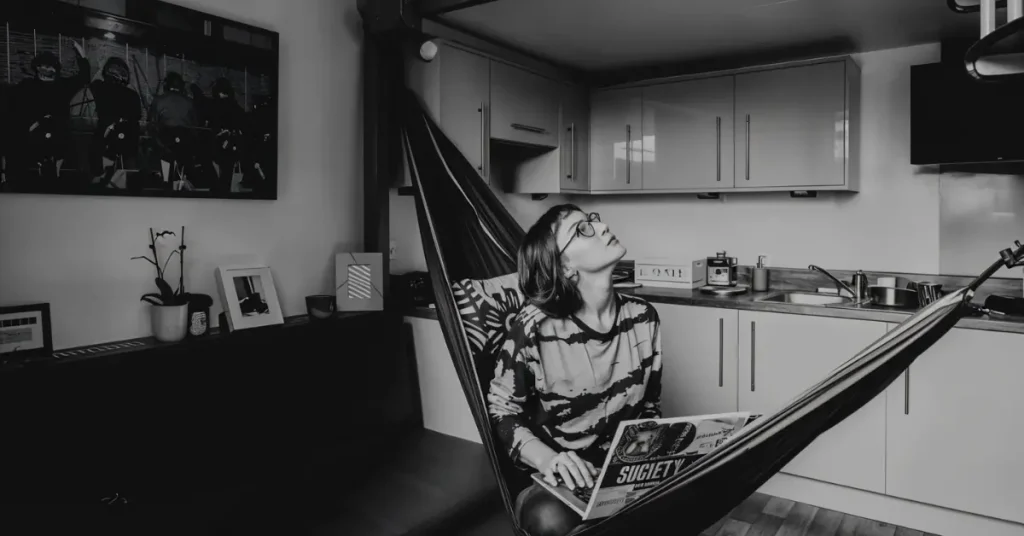
If you work from home, you’ve probably faced it: the family gathering question, “When will you get a real job?” For some, work doesn’t count unless there’s a commute, an office building, and a suit involved. But Stanford researchers found remote workers are 13% more productive, thanks not only to fewer distractions but also to the comfort of working in whatever feels right — pajamas included.
If comfort helps us work better, why are we still so attached to the idea that productivity has to look formal? The answer might be more about habit than necessity.
Old workplace wisdom used to say that dressing the part makes you act the part. But newer research challenges that idea. A 2020 study from the Journal of Experimental Social Psychology suggests that people working from home are more productive when they feel physically comfortable, clothes included.
It makes sense. When you’re not distracted by tight waistbands or stiff collars, your mind has more space to focus. Add in the absence of office politics, ambient noise, and endless meetings, and you often end up more grounded and present. You’re not trying to look busy — you’re just getting things done.
For my friend Matthew, who’s a freelance UX designer in Seattle, that shift was a turning point. Swapping his business casual wardrobe for fleece joggers and old band tees made him enjoy work again and reclaim two hours a day that commuting used to take. This wasn’t about doing less, it was about removing the small frictions that made work feel heavier than it needed to be.
For anyone still unsure, a 2020 report from Owl Labs shows remote work has tangible benefits. According to the study:
Numbers like these suggest that success doesn’t have to happen in an office tower or under fluorescent lights.
 The Myth of the “Professional” Uniform
Most people won’t admit this, but the so-called rules around professional dress were always arbitrary. Ties, heels, pencil skirts, these weren’t signs of skill, they were signals of conformity. In some ways, they created distance between who we are and who we’re supposed to be at work.
Working from home disrupts that illusion. It invites us to bring more of our whole selves into the day. And yes, that includes the soft hoodie you’ve had since college or the socks with cartoon cats on them. These things don’t take away from our work. If anything, they can bring a sense of emotional ease that allows us to do better work.
Comfort isn’t only physical, it’s emotional. For people dealing with anxiety, depression, or burnout, the thought of dressing for a formal office can feel like another hurdle. Comfortable clothes can take the edge off and make starting the day easier.
Allison, a digital marketer and mom of two, told me she sometimes starts the day with her coffee still in hand and her kids’ breakfast dishes on the counter. On those mornings, she stays in her pajamas a little longer. “It’s like I’m giving myself permission to be gentle,” she said quietly. “And that’s when I can actually start moving forward.
This isn’t a one-size-fits-all rule. Some people feel empowered by dressing up, even at home. The key is choice. The freedom to decide what feels right—for your body, your mind, and your work.
Working from home can blur the lines between personal and professional life. That’s why small habits matter:
These aren’t just random suggestions, they’re habits supported by years of research. A 20-year study from the American Psychological Association found that people who work from home with healthy boundaries report higher morale, greater job satisfaction, and less stress. Brigham Young University found that employees with flexible schedules can work nearly 19 extra hours a week before feeling work–life conflict. And the University of Wisconsin discovered that remote workers are generally more satisfied and less stressed than their office-bound peers.
The point is simple: comfort and freedom are huge benefits of remote work, but without structure, they can easily backfire. The best results come when you enjoy the flexibility while still protecting your time and energy.
Looking Ahead
Remote work isn’t going anywhere for many industries, and the shift in mindset it brings is just starting. Professionalism isn’t about looking a certain way; it’s about the quality of the work you do.
So if you find yourself working in pajamas and feeling a bit more at ease, it might not be a coincidence. It might just be that you’ve found what works for you.
If this made you rethink what “professional” looks like, share it with someone who’s still stuck on the old rules — and tell me in the comments what your ideal workday really looks like.