Florida’s year-round warm climate and active way of life encourage residents to spend more time outdoors, stay physically engaged, and enjoy everything from recreational sports to long days on their feet. While these habits support overall wellness, they can also place repeated stress on the spine, especially when combined with desk work, long commutes, or physically demanding jobs. Many people ignore occasional stiffness or back discomfort, assuming it is simply part of getting older or leading a busy life. Over time, however, seemingly minor issues can gradually affect mobility, posture, and everyday comfort if they are left unaddressed. That is why many Floridians seek a more proactive approach to caring for their spinal health instead of waiting until pain becomes severe.
Clinics that emphasize prevention alongside treatment help patients build healthier movement habits that support lasting results. At Roach Spine & Disc Center, this long-term philosophy gives patients a practical path toward stronger spinal health, improved function, and greater confidence in their daily lives.
The first appointment sets the clinical baseline. Staff review symptom history, work demands, sleep quality, prior injuries, exercise habits, and pain triggers. That conversation helps separate short-term irritation from deeper mechanical patterns. An exam may check spinal motion, reflexes, sensation, strength, muscle tone, and posture. Care choices should follow those findings, rather than assumptions about where pain begins.
Fast relief has value, but spinal health depends on controlling repeated stress. A recurring flare may come from weak hip support, poor lifting form, prolonged sitting, or uneven gait. Clinicians look for those patterns because pain often quiets before mechanics improve. Lasting progress usually requires treatment, movement correction, and better habits outside the office.
Spinal discs cushion vertebrae and help distribute pressure during motion. They respond to hydration, movement, and load balance. Bulging, herniation, or degenerative changes can irritate nearby nerves or restrict mobility. For suitable cases, decompression may apply controlled traction to reduce disc pressure. Proper screening matters, since symptom patterns and examination findings guide whether this option is appropriate.
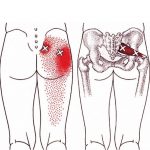
Nerve irritation can travel far from its source. Sciatica, arm tingling, numbness, burning pain, or weakness may reflect compression near the spine. Evaluation often includes reflex testing, strength checks, sensory review, and pain mapping. Those steps help clarify whether joints, discs, muscles, or posture are causing stress on neural tissue. Accurate identification keeps care focused.
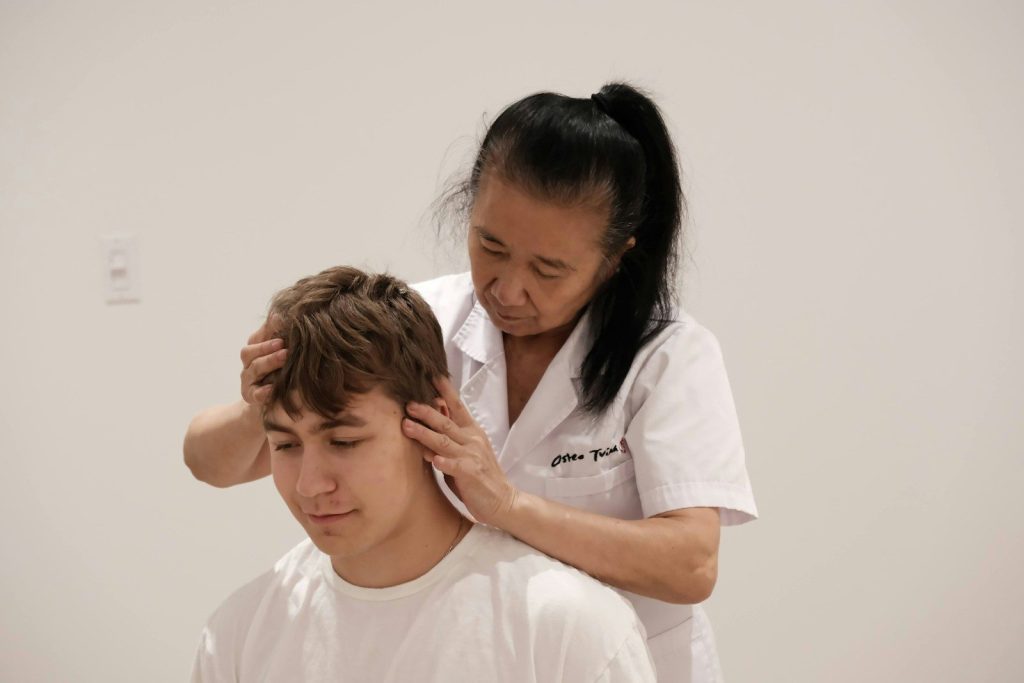
Muscles protect the spine during sitting, bending, lifting, rotation, and walking. Tight fibers can limit motion, while weak stabilizers may allow excess strain. Soft tissue work may reduce guarding after injury or overuse. Exercise guidance often targets core endurance, hip mobility, and upper back control. Better muscular support helps ordinary tasks feel less taxing.
Daily posture affects spinal loading more than many people realize. Phones, desk work, driving, and long sitting can increase neck and lower back strain. Screens should sit near eye height, feet should stay supported, and shoulders should remain relaxed. Short movement breaks help circulation and joint lubrication. Small corrections can reduce accumulated stress.
Foot position can change how force moves through the knees, hips, pelvis, and spine. Collapsed arches or uneven gait may increase strain during standing and walking. Custom orthotics may help certain patients improve support and alignment. They are usually considered after examining foot structure, movement pattern, and symptom history. Better ground contact can reduce unnecessary spinal load.
Progress should be judged by function, not pain scores alone. Better sleep, longer walks, easier bending, fewer flare-ups, improved motion, and stronger work tolerance all matter. A care plan may shift as the body responds. Tracking these markers helps patients connect treatment with daily gains. It also shows which routines preserve improvement between visits.
Education gives patients control between appointments. Clear guidance may cover lifting mechanics, stretching, hydration, sleep position, activity pacing, and warning signs. Good explanations reduce fear without minimizing symptoms. Patients need practical steps they can repeat at home, work, and during exercise. Consistency improves when people know what each habit changes physiologically.
A chiropractic practice focused on long-term spinal health looks beyond temporary relief. It studies how discs, nerves, joints, muscles, posture, gait, and daily routines interact under stress. Through careful assessment, conservative treatment, education, and measurable progress tracking, patients can make informed choices about movement and recovery. The best care supports comfort today while helping the spine tolerate tomorrow’s demands with less irritation and greater confidence.