When a pet arrives at an emergency veterinary hospital, most owners understand that the immediate priority is stabilizing the crisis. According to Muhammad Harfoush, BVSc, DACVECC, a board-certified Veterinary Emergency and Critical Care Specialist, what happens after that initial emergency treatment is often less familiar, even though it is a necessary step, and just as important to a pet’s recovery.
A critically ill patient is one whose condition remains unstable or can change rapidly despite treatment.
While the emergency room focuses on immediate intervention, the intensive care unit (ICU) is where the sickest patients receive continuous monitoring, advanced treatment, and around-the-clock support. The severity scores of patients that are hospitalized in the ICU vary from very stable pets to very critically-ill patients.
“Emergency medicine focuses on recognizing and stabilizing life-threatening conditions,” Harfoush explains. “Critical care begins once that acute phase of the crisis has been addressed through the ER receiving team, and the patient requires hospitalization for further care and stabilization.”
Not every pet admitted to an emergency hospital requires ICU care. Some stabilize after treatment and are discharged or admitted to a standard hospital ward, while others remain critically ill and require intensive care and further interventions. Commonly, all patients are cared for by the hospitalist or the ICU specialist.
Common conditions requiring ICU-level care include, but not limited to, sepsis, respiratory and cardiovascular failure, severe trauma, toxin exposures, multiple organ failure, and serious post-operative complications. These patients frequently require advanced diagnostics, intensive nursing care, and specialized therapies, without which they are unlikely to survive.
The initial evaluationmay include different types of labwork, traditional and advanced diagnostic imaging, blood pressure monitoring, oxygen levels assessments, and other tests to help determine the nature severity of the illness. Based on those findings, owners are typically provided with an initial estimate for hospitalization and treatment, understanding that recommendations may change as the patient’s condition evolves or more test results are available.
The emergency team’s first priority is stabilization. Once life-threatening problems have been addressed, the patient is reassessed to determine whether ongoing intensive care is necessary.
“In many hospitals, the emergency clinician manages the initial stabilization and the initial hours of admission, before handing the patient over to the ICU team,” Muhammad Harfoush says. “That transition allows specialists and dedicated ICU staff to focus entirely on the patient’s continued care.”
Some pets improve quickly after emergency treatment, while others deteriorate despite initial stabilization and require more advanced monitoring and specialized care.
The veterinary ICU is designed for patients that require continuous close observation and immediate intervention if complications arise.
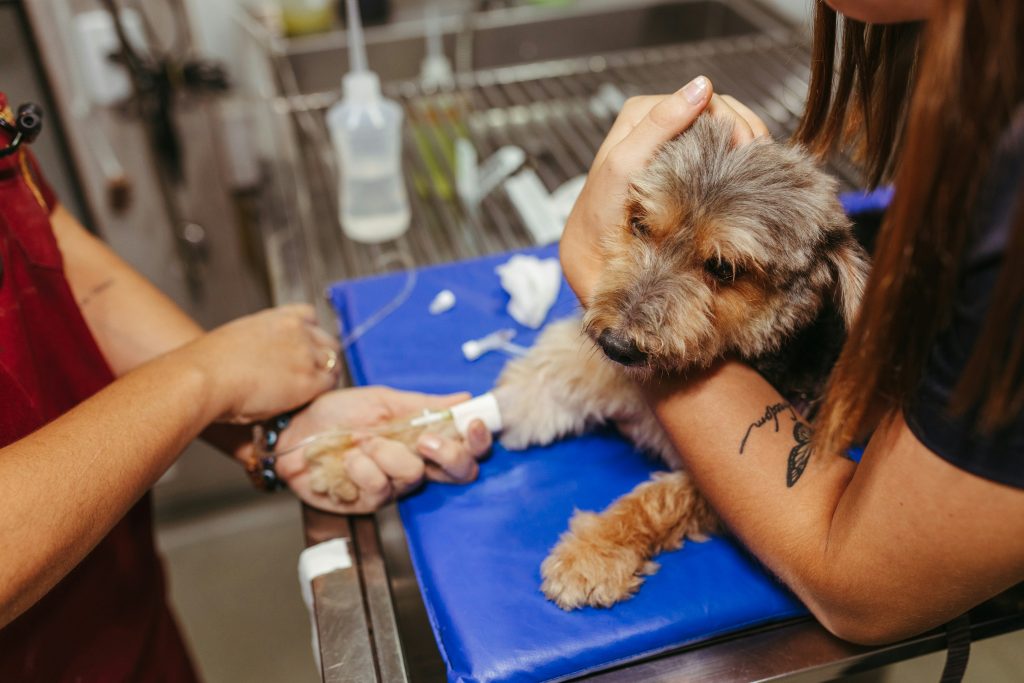
Depending on the patient’s condition, treatment may include therapies such as intravenous medications, advanced fluid therapy, blood pressure monitoring, assisted feeding tubes, blood transfusions, or traditional and advanced oxygen therapies such as high-flow nasal oxygen and mechanical ventilation.
Unlike a standard hospital ward, the ICU is filled with monitoring equipment, infusion pumps, oxygen systems, and highly skilled staff performing frequent patient assessments. It can be busy and noisy because critically ill patients require constant attention.
“Our priority is identifying changes as early as possible,” Muhammad Harfoush explains. “Continuous monitoring allows us to adjust treatment quickly when a patient’s condition changes.”
Veterinary technicians are essential members of the ICU team and are typically among the most highly trained technicians in the hospital.
They monitor patients around the clock, administer treatments, collect diagnostic samples, assist with procedures, and document changes in a patient’s condition. Just as importantly, they recognize subtle signs of improvement or deterioration and communicate those observations directly to the managing veterinarian.
“The ICU functions as a team,” Muhammad Harfoush says. “The communication between inpatient technicians and the veterinarian is one of the most important parts of caring for critically ill patients.”
Critical care medicine is dynamic. New laboratory results, imaging findings, changes in vital parameters or responses to medication can all require immediate adjustments to a treatment plan.
Medications may be added or discontinued, fluid therapy may change, additional diagnostics may be recommended, or new directed treatments may become necessary. Rather than following a fixed plan, ICU care adapts continuously to the patient’s progress.
Because a critically ill patient’s needs can change quickly, treatment estimates may also change during hospitalization.
Additional medications, diagnostics, procedures, or specialized equipment may become necessary as the case evolves. Veterinary hospitals, therefore, contact owners whenever significant changes require financial authorization.
“We encourage owners to keep their phones nearby while their pet is hospitalized,” Muhammad Harfoush says. “If major changes occur, we need to discuss updated treatment recommendations before moving forward. We also may ask you to revise your pet’s CPR code.”
Some of the most challenging conversations in veterinary medicine occur in the ICU.
Veterinarians work closely with families to discuss prognosis, quality of life, treatment options, and the likelihood of recovery. Because many owners are still processing the seriousness of their pet’s condition, these conversations are introduced gradually whenever possible.
Families are often encouraged to visit their critically-ill pets so they can better understand and visualize the patient’s change in condition firsthand before making difficult decisions.
“Our responsibility is to tactfully provide the full clinical picture while helping families make informed decisions,” Muhammad Harfoush explains. “These conversations require compassion, patience, and realistic expectations.”
As patients improve, they may be discharged or transferred from the ICU to another specialty service before eventually returning home. Recovery often continues after discharge through medications, activity restrictions, rehabilitation, and follow-up appointments with both the veterinary specialists, and the family’s primary veterinarian.
Communication remains an important part of hospitalization. ECC veterinarians aim to provide periodic updates e.g. twice daily, while technicians may provide additional updates depending on the patient’s condition and caseload. Critically ill patients require more frequent communication, although direct patient care must always remain the team’s highest priority.
Understanding what happens inside the veterinary ICU helps owners appreciate the specialized care taking place after the initial emergency has passed. From continuous monitoring and advanced treatments to constant collaboration between veterinarians and technicians, every aspect of critical care is focused on one goal: giving hospitalized pets the best possible chance of recovery.
Muhammad Harfoush, DACVECC, is a Washington, D.C.-based board-certified Veterinary Emergency and Critical Care Specialist. His clinical interests include environmental emergencies, trauma, and critical metabolic disease in emergency and intensive care settings. Outside of veterinary medicine, interests include soccer, boxing workouts, travel, and time outdoors.