In summary: Tung tung tung sahur is a traditional rhythmic chant or percussion pattern used in Southeast Asian communities, particularly in Indonesia, to wake people up for the pre-dawn meal during Ramadan. It represents a communal spirit, blending cultural heritage with religious devotion to ensure the fast begins on time.
The essential insights covered in this guide explore the cultural evolution of the sahur wake-up call, the specific instruments used to create these iconic sounds, and the social impact this tradition has on modern neighborhood dynamics. Reading further will give you a deeper look into how a simple sound became a symbol of unity and how you can preserve this tradition in a digital age.
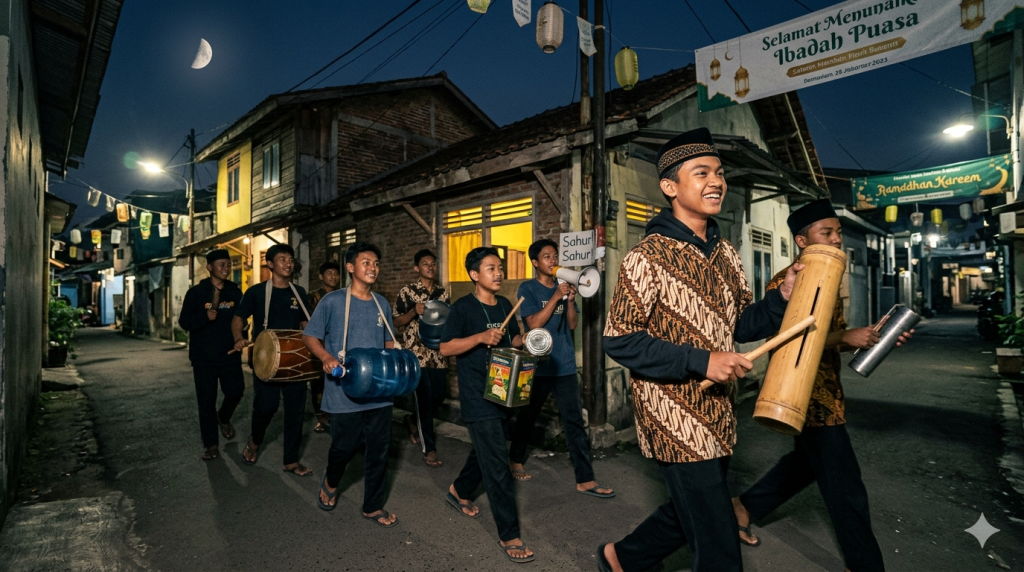
When the moon enters the holy month, the atmosphere changes. One of the most nostalgic elements for many is the sound of tung tung tung sahur echoing through the narrow streets of Jakarta, Bandung, or rural villages in Java. It isn’t just noise; it is a meticulously timed social service. Historically, before smartphones and digital alarms, the community relied on “Sahur On The Road” groups or local youth to signal that it was time to eat before the Fajr prayer.
The rhythm usually follows a syncopated beat, often using bamboo slit drums (kentongan) or recycled paint cans. The repetition is designed to be catchy and persistent, ensuring that even the deepest sleepers are nudged into consciousness. It represents a “gotong royong” (mutual cooperation) spirit where the youth take responsibility for the well-being of their elders and neighbors.
Even in an era of high-tech alarms, the human element of the pre-dawn wake-up call remains irreplaceable. There is a psychological comfort in hearing the neighborhood come alive. Based on cultural studies, these traditions provide a sense of belonging that digital devices cannot replicate.
Creating that signature sound requires more than just enthusiasm. While it might sound like random banging, there is often a lead drummer who dictates the tempo.
I have observed a fascinating shift in how these sounds are produced. In the past, the beats were strictly functional. Today, they have become musical. Some groups incorporate elements of dangdut or koplo into their rhythms, making the stroll through the neighborhood feel like a mini-festival.
According to research on Indonesian folk traditions by Smithsonian Folkways, the use of slit drums and percussive signals has roots that predate the modern religious application, originally used for village communication and emergency alerts. This adaptation into the Ramadan context shows the fluidity of local customs.
If you are looking to organize a local group or simply want to understand the etiquette, here are some real-world considerations.
Practical Examples:
Common Mistakes:
| Feature | Traditional Percussion | Smartphone Alarms |
| Source | Human/Community | Personal Device |
| Reliability | Depends on the group | Highly reliable |
| Social Value | High (Builds community) | Low (Individualistic) |
| Customization | Live improvisation | Preset ringtones |
| Reach | Entire neighborhood | One person |
If you want to keep the spirit of tung tung tung sahur alive in your area, follow these steps to ensure it remains a positive experience for everyone.
While I find the tradition beautiful, it is important to acknowledge the balance between tradition and modern urban living. In dense cities, the “tung tung” sound can be polarizing. A study on urban soundscapes featured in The Jakarta Post notes that as neighborhoods become more diverse, the “negotiation of noise” becomes a central theme during religious holidays. Respecting the “golden mean”—being loud enough to wake the sleepers but not so loud as to cause distress—is the hallmark of a great sahur group.
Pros:
Cons:
It is an onomatopoeic representation of the sound made by a wooden or bamboo slit drum. It has become a shorthand for the entire tradition of waking people up for their pre-dawn meal.
No, it is a cultural tradition (urf) rather than a religious obligation (fard). While the act of eating sahur is encouraged in Islamic practice, the method of waking people up varies greatly by country and culture.
Many groups now record their beats and play them through portable Bluetooth speakers, or use social media to live-stream their parades. However, the most respected groups are still those that play live instruments.
Absolutely. Many people join the walk simply to help with the “Sahur!” chants or to help carry equipment. It is more about the presence and the spirit than professional musical skill.
Similar traditions exist in other Muslim-majority countries, such as the Musaharati in the Levant and Egypt, who beats a small drum and calls out names of residents. The “tung tung” style, however, is very specific to the Malay-Indonesian archipelago.
The best approach is a friendly conversation with the mosque youth or local neighborhood leaders. Most groups are happy to adjust their volume or route if they know it is causing a specific issue for a neighbor.
The rhythm of tung tung tung sahur remains a powerful reminder of our connection to one another. As we navigate a world that is increasingly digital and isolated, these analog moments of community effort remind us that we are part of something larger. Whether you are the one holding the bamboo stick or the one waking up to the sound, there is an undeniable magic in this pre-dawn symphony.