There’s a particular hour in childhood—just before sleep, when the house goes quiet—that belongs entirely to imagination. When colors blur into dreams, problems untangle themselves, and the world feels both smaller and infinitely more possible. It’s a threshold moment, neither day nor night, where stories matter most.
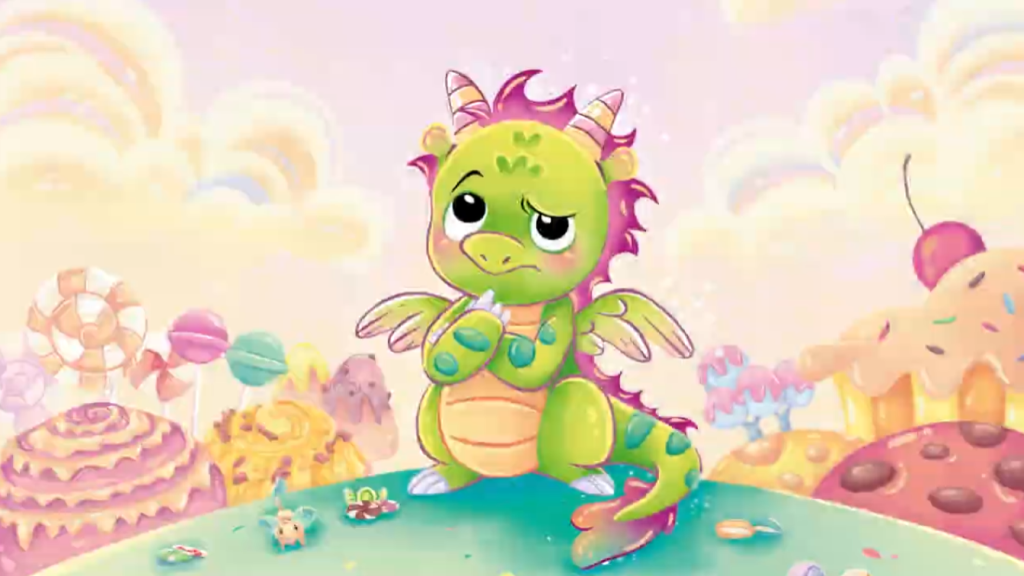
Phoenix-based author Ellie Moss knows this hour well. Her debut picture book, Dibs the Dragon and the Marshmallow Rescue, and its companion coloring book, Lickitypop Dreams, are built for it.
Set in the whimsical world of Lickitypop—where jellybean forests grow beside Squishpuff Swamp, and bubble scooters zip through marshmallow meadows—the books offer something increasingly scarce in children’s media: permission to slow down.
Moss didn’t plan to create a children’s universe. Lickitypop emerged during what she describes as “a demanding season,” a private creative space where she could think gently when everything else felt urgent. Characters appeared gradually. Landscapes filled themselves in. And every problem was solved not through spectacle, but through curiosity.
Eventually, she realized this world might belong to more than just her.
The result is Dibs, a helpful dragon with a big heart and one missing piece: a best friend. When he discovers Mooch, a marshmallow mole trapped in sticky swamp depths, Dibs doesn’t charge in with heroics. He pauses. Looks around. Thinks creatively. Helps.
That’s the entire story. No villain. No dramatic rescue sequence. Just a dragon figuring out how to be useful, and the quiet satisfaction of making someone else’s day a little better.
The language is deliberately simple—short, rhythmic sentences with playful sound words and repetition. It’s designed for ages three to eight, equally suited to a child sounding out words alone or a caregiver reading aloud for the third time that week. The repetition isn’t accidental. It supports early speech development, invites participation, and makes space for giggles.
Visually, the book takes an unusual approach. Rather than the high-contrast, overstimulated color palettes common in picture books today, illustrator [name] uses soft pastels. The effect is calming and focused—a book that can be read at bedtime without winding anyone up.
For sensory-sensitive children, that matters. For exhausted parents, it’s a relief.
Lickitypop Dreams, the companion coloring book, extends the world beyond the page. But it’s not just for kids. A child might color jellybean trees while a parent fills in bubble scooters beside them. Or an adult might return to it alone later, using those same scenes as a moment of stillness at the end of a long day.
The premise is simple: creativity doesn’t belong only to childhood. And sometimes, play is what people need most.
In a market saturated with high-energy characters and breakneck plots, Lickitypop moves at a different speed. It doesn’t push children to feel something or teach them an explicit lesson. It trusts them to be curious, to notice things, and to ask questions if they want to.
For caregivers, the book often becomes a conversation starter. What does it mean to help someone? How does it feel to be nervous but try anyway? Why is it okay to take one’s time? These aren’t questions the book answers. They’re questions it makes room for.
Moss isn’t trying to make children exceptional. She’s reminding them—and the adults around them—that being thoughtful, curious, and kind is already more than enough.
Whether Dibs the Dragon becomes a child’s first favorite, a nightly ritual, or simply a book returned to when the world feels too loud, it offers something many families didn’t know they were looking for: a quieter story, a softer rhythm, and a reminder that imagination can still be a place to rest.