We live in a culture that prizes independence. From self-help to self-care, we are taught that growth happens when we go inward and figure it out alone. Yet more people than ever are realizing that healing does not have to be solitary.
Psychologists and neuroscientists are finding that connection may be one of the most important ingredients for emotional and physical health. Studies show that people who feel supported by others live longer, experience less stress, and recover faster from illness. Group therapy, once seen as secondary to individual counseling, now demonstrates outcomes that are equally effective for anxiety, depression, grief, and trauma. The common thread across these studies is clear: when we heal together, we thrive together.
Neuroscience helps explain why this happens. Research on mirror neurons, first identified by Dr. Giacomo Rizzolatti and his colleagues, shows that our brains are wired to reflect the emotions and actions of the people around us. When we see someone relax or release tension, our nervous system follows suit. This automatic mirroring, sometimes called emotional contagion, creates a physiological bridge between people.
In group settings, that bridge strengthens. Studies of collective meditation show that participants report deeper calm, greater mindfulness, and stronger feelings of connection than those who practice alone. Psychologists refer to this as co-regulation, the process by which the presence of safe, supportive others helps our nervous system shift from stress to rest.
A large meta-analysis of more than 27,000 participants found that group therapy performs just as well as individual therapy across a range of mental health conditions. Researchers highlight unique factors that make group work powerful: the sense of universality, hope, altruism, and belonging.
Feeling seen and understood changes the body. When people feel safe in a group, their heart rate slows, breathing deepens, and the stress response eases. A study of Himalayan singing bowl meditations found significant reductions in heart rate and an increase in parasympathetic activity, the body’s natural rest-and-repair state.
Belonging has measurable effects beyond the moment. Harvard researchers have linked strong social ties to improved mood, reduced inflammation, and longer life expectancy. Even simple acts of kindness toward neighbors have been shown to lower loneliness and stress.
Psychologists say that the experience of being witnessed may be one of the most profound tools for healing. When others hold space for our emotions, it reminds us that our pain is part of the shared human story, not a personal flaw.
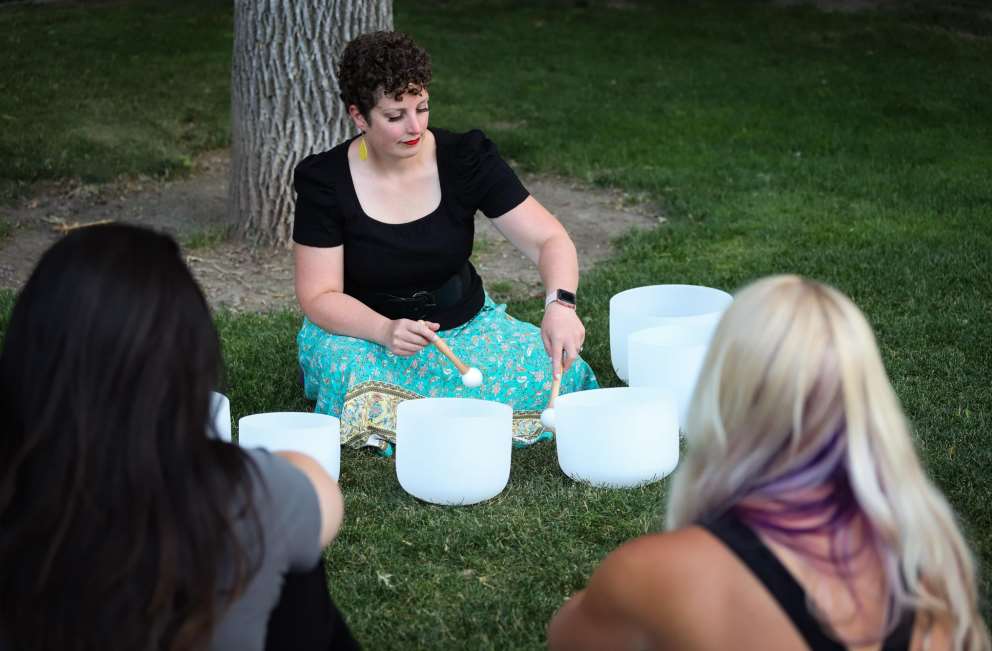
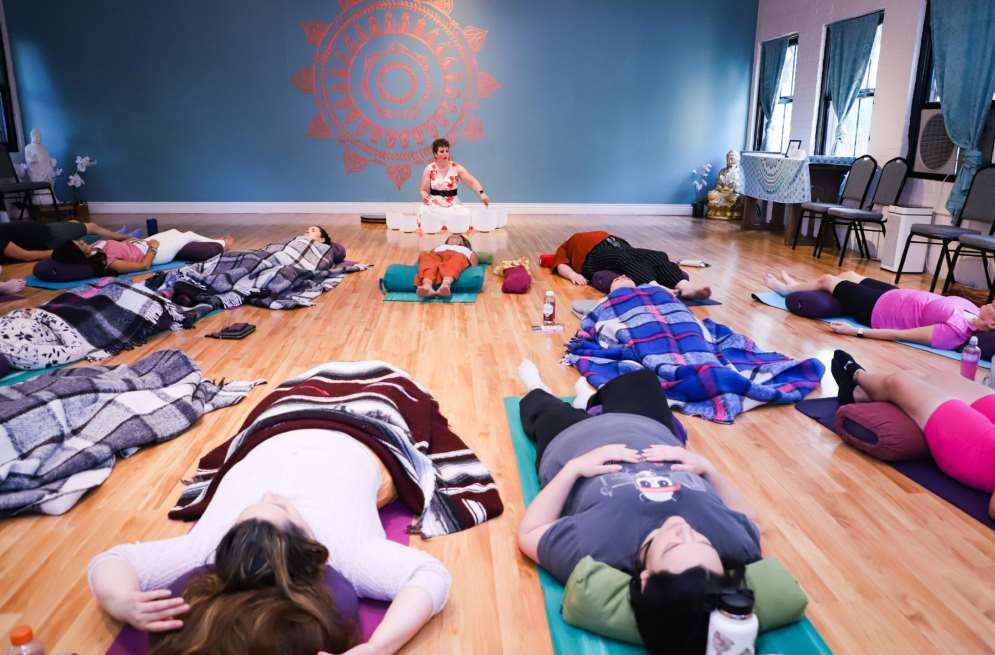
These principles come to life in Sandy, Utah, where a gathering called The Freedom of Surrender invites the community to experience collective growth firsthand. Hosted at Synchronicities wellness center by Medium and Akashic Records Practitioner Jacqueline Jenson, the event combines guided visualization, sound healing with crystal bowls and ocean drums, and reflective exercises designed to help participants release what no longer serves them.
Sound healing studies have shown that rhythmic tones and vibrations reduce anxiety, tension, and physical pain. Participants new to the practice often report the greatest benefits, suggesting that simply showing up with an open mind can shift the body’s stress response.
The Freedom of Surrender’s inclusive and non-denominational atmosphere reflects what psychologists call psychological safety, the feeling that it is safe to be authentic without fear of judgment. That sense of safety allows the nervous system to relax and makes emotional release possible.
The setting itself also supports healing. Synchronicities incorporates natural elements like salt caves and selenite chambers, which researchers link to improved mood and relaxation through increased exposure to negative ions. Studies on therapeutic environments show that soft lighting, comfort, and sensory calm significantly enhance wellbeing.
The benefits of shared healing go far beyond a single evening. Research in community psychology shows that group healing fosters a lasting sense of purpose and connection. People who participate in collective practices, from group meditation to community service, report improved sleep, lower anxiety, and a greater sense of meaning.
Neuroscience also shows a compounding effect. Repeated participation in group music or therapy sessions strengthens the body’s ability to regulate stress over time. One study found that people attending more than twenty sessions of group music therapy had a 33 percent higher rate of positive outcomes than those who attended fewer sessions.
As community healing spaces continue to grow across the country, they represent a return to something ancient. Indigenous and cultural traditions have long known that healing is a shared act rooted in storytelling, ritual, and care for one another. Modern science is finally catching up.
Nearly one in five American adults now practices meditation, many seeking alternatives that combine accessibility, spirituality, and community. The evidence suggests they are onto something profound. From the brain’s mirror neurons to the heart’s natural rhythm, our biology is designed for connection.
The Freedom of Surrender is one of many spaces answering that call, a reminder that healing does not have to happen in silence. Sometimes it begins when we gather, breathe, and exhale together.