If you are dealing with sharp, stabbing pain every time you take a step, you are probably asking: what is the fastest way to heal a heel spur? The good news is that more than 90 percent of people recover fully with conservative, non-surgical treatments. A combination of targeted stretching, proper footwear support, and anti-inflammatory care started early gives you the best chance of a fast and complete recovery.
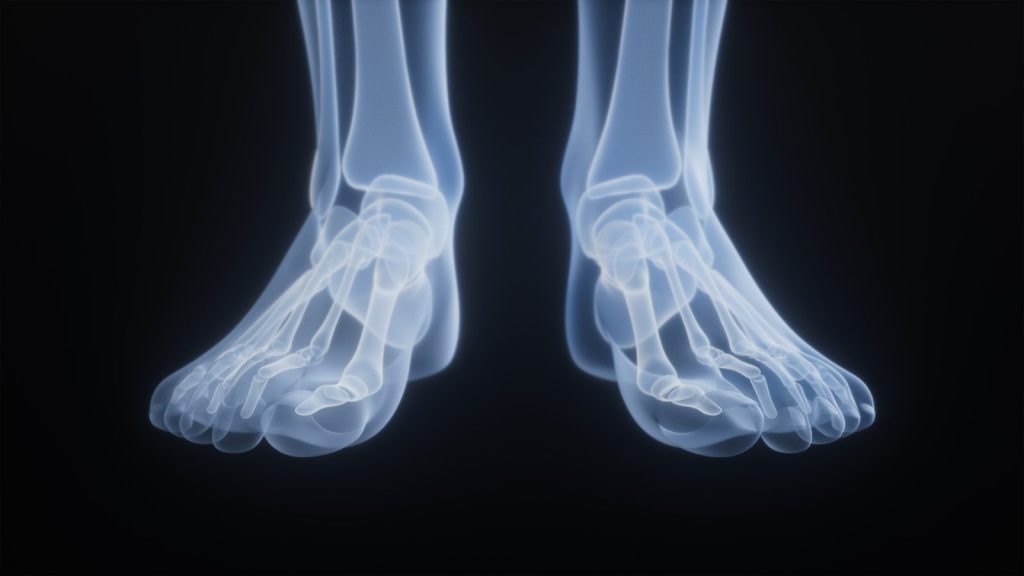
A heel spur is a bony calcium deposit that forms on the underside of the heel bone, often as a result of long-term strain on the plantar fascia or Achilles tendon. The spur itself is not always painful. However, the surrounding inflammation is what causes the intense discomfort that most patients experience, particularly during those first steps in the morning.
For most patients, aggressive early home care delivers the fastest results. Starting treatment within the first few days of symptoms is critical. The following strategies form the core of any effective heel spur recovery plan:
Additionally, elevating the foot when resting helps reduce blood pooling and inflammation in the heel tissue. Therefore, making this a consistent habit during the first week of treatment significantly speeds up early recovery.
Stretching is one of the most powerful tools in healing a heel spur quickly. Daily stretching loosens the plantar fascia and calf muscles, reducing the pulling tension that creates and aggravates the spur. Perform each of these exercises in the morning before your first steps and again in the evening:
Furthermore, rolling a frozen water bottle or a tennis ball under your foot for five minutes at a time serves as both a stretch and a cold therapy treatment simultaneously. As a result, this simple technique is one of the most time-efficient tools in your recovery routine.
Wearing the right orthotics is one of the fastest ways to reduce heel spur pain during daily activity. Custom or over-the-counter orthotic insoles redistribute pressure away from the heel spur and cushion every step you take. Additionally, orthotics correct biomechanical issues such as flat feet or overpronation that may be contributing to the condition in the first place.
Heel cups are a more targeted option that fits inside your current shoes and cradles the heel with extra padding. Night splints are another highly effective tool; they hold the foot in a dorsiflexed position overnight, providing a gentle continuous stretch to the plantar fascia while you sleep. Therefore, patients who add night splints to their routine often notice dramatic improvements in morning pain within one to two weeks.
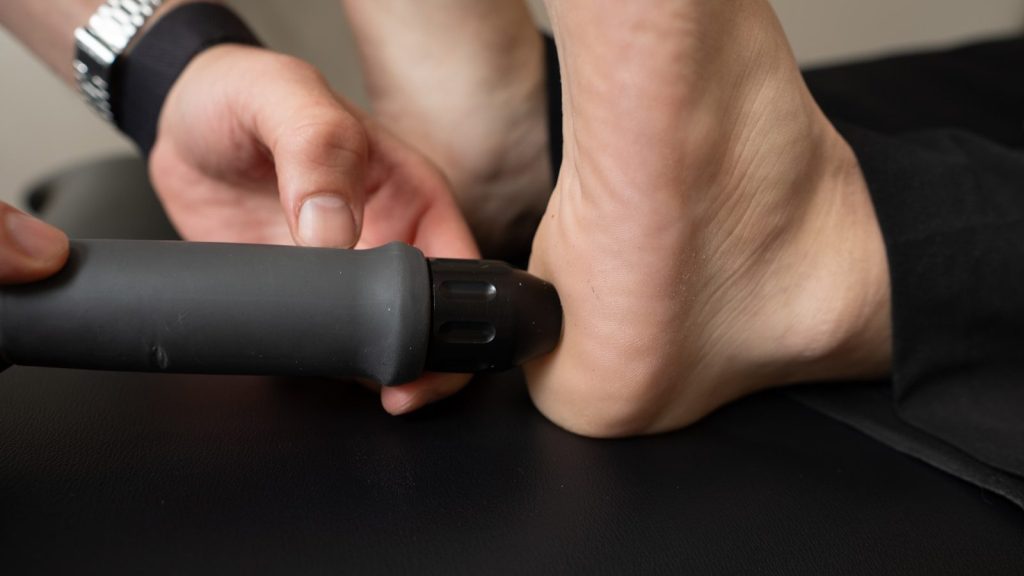
When home care alone does not deliver fast enough results, several professional treatment options can accelerate the healing process considerably.
For most patients, a combination of physical therapy and custom orthotics delivers the fastest results without any invasive procedures. Meanwhile, ESWT is an excellent option for patients who have been struggling for three months or more without adequate improvement from basic conservative care.
Most patients experience significant pain relief within six to eight weeks of consistent conservative treatment. However, full recovery from a heel spur typically takes three to twelve months, depending on the severity of inflammation and how consistently treatment is applied. WebMD confirms that more than 90 percent of people get better with non-surgical treatment before the twelve-month mark.
The timeline also depends on how early you begin treatment. Patients who start stretching, icing, and using orthotics within the first week of symptoms tend to recover faster than those who delay care. In contrast, patients who continue high-impact activities through the pain often extend their recovery by months. Therefore, acting immediately at the first sign of heel pain is the single most important factor in a fast recovery.

Surgery for heel spurs is rarely required and is only considered after nine to twelve months of failed conservative treatment. When surgery does become necessary, two main procedures are performed: plantar fascia release and heel spur removal. Recovery from plantar fascia release surgery typically takes up to six weeks, while heel spur removal surgery can require up to three months of recovery time.
Minimally invasive keyhole surgery is now a widely available option that significantly reduces recovery time compared to traditional open surgery. Most patients who undergo minimally invasive procedures can bear weight on the foot within a few days and return to normal activities within two to four weeks. However, swelling and residual discomfort can persist for up to six months following any surgical intervention. Therefore, exhausting all conservative options before choosing surgery is always the recommended approach.
Once you recover, making a few lasting changes reduces the risk of heel spurs developing again. These habits protect the plantar fascia and heel bone from repeated stress:
Additionally, staying consistent with low-impact cross-training exercises such as swimming or cycling maintains fitness while keeping pressure off the heel during any future flare-ups. As a result, you protect your long-term foot health without sacrificing your activity level.