
Not too long ago, wellness was much simpler. It involved aspects such as going for a walk, drinking more water, and trying to get enough sleep. Now it feels like there is a new habit to adopt every week. Morning routines became popular. Then came the evening routines. After that? Embrace cold showers, breathwork, lymphatic drainage, morning exercises, meditation apps, sleep trackers, blue light glasses, and supplements for almost everything!
It’s not surprising that people care about their health; it makes sense. Our health is our wealth, after all. What is surprising, however, is where all the attention goes.
There are now apps that track sleep quality, and you can buy a smartwatch that measures recovery. There are even discussions around magnesium supplements and whether they really help.
Meanwhile, very few people could tell you the environment where they sleep and what is present there. Maybe that sounds like an odd observation, but the more it is considered, the stranger it seems.
People spend a huge amount of time trying to improve the first twenty minutes of their day and almost none thinking about the eight hours that come before them.
A Bad Night’s Sleep Can Spell Trouble
There’s little that can affect a mood faster than a bad night’s sleep. Most people know exactly how they feel after a restless night, even if they cannot explain what caused it. According to the National Heart, Lung, and Blood Institute, our bodies move through different sleep stages during the night, and each of them plays a role in recovery, learning, memory, and overall wellbeing.
Yet most conversations about sleep focus on behavior: go to bed earlier, use fewer screens, and reduce stress. Oh, drink less caffeine, of course. Again, this is all reasonable advice.
What nobody seems to discuss is the room itself. Not the routine they undertake beforehand, but the sleep itself, from the pillow and the bedding to the temperature. These elements quietly surround us for a third of our lives.
Many of us have experienced a night when the room felt too warm, the pillow felt wrong, or the bedding simply wasn’t comfortable. Usually, there is no dramatic moment. You just wake up feeling slightly tired and not quite sure why.
Then stress gets the blame. Sometimes that is probably true. Sometimes, maybe it isn’t.
Sleep Microclimate
The environment where you sleep plays a massive part in how much rest you truly enjoy. Researchers even have a name for the environment created around the body during sleep: the sleep microclimate. It sounds much more complicated than it really is, but it simply refers to the temperature, humidity, and airflow around the body during sleep. If that environment becomes too warm or too damp, sleep can become less comfortable. When comfort disappears, it is not difficult to imagine why sleep quality might suffer too.
Introducing Natural Materials for Sleep
This may be one reason natural materials have attracted more attention in recent years. When somebody says “wool”, most people imagine a thick winter sweater, not a pillow.
Researchers are often interested in wool not because it is warm, but because of how it manages moisture and temperature. Wool fibers can absorb moisture vapor while remaining dry to the touch, helping create a more balanced sleeping environment. What experts are telling us is to count on wool for better, cooler sleep.
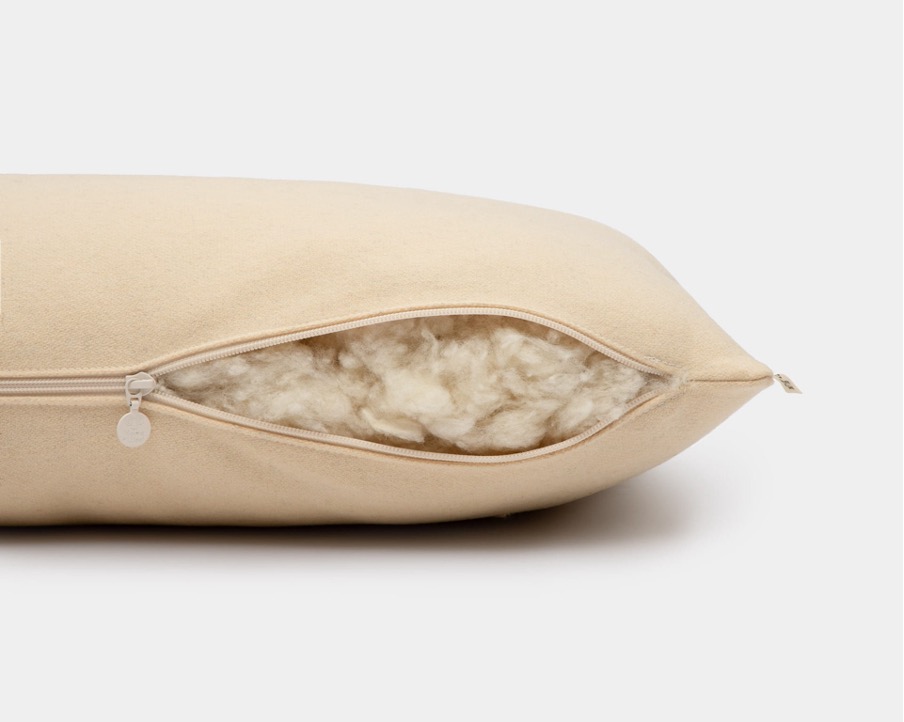
These days, many people have started paying closer attention to the materials they bring into their homes. Something as simple as an adjustable wool pillow is no longer seen only as a bedding product, but as part of a broader interest in comfort, natural materials, and creating a healthier sleep environment.
Researchers at the University of Sydney also explored the relationship between wool and sleep. Participants sleeping in wool conditions fell asleep faster and experienced more efficient sleep compared with alternative materials.
The study itself is not revolutionary, but what catches attention is something much simpler: comfort matters, not in a luxury-hotel kind of way, but in a very practical, everyday way.
Closing Remarks
In the future, before adding another habit, another supplement, or another app, it is worth looking at what is already there: the room where we sleep, the bedding, and the pillow. These are the crucial things people barely notice when they work well, but quickly notice when they don’t.
For something that takes up eight hours every day, that seems like a reasonable place to start.