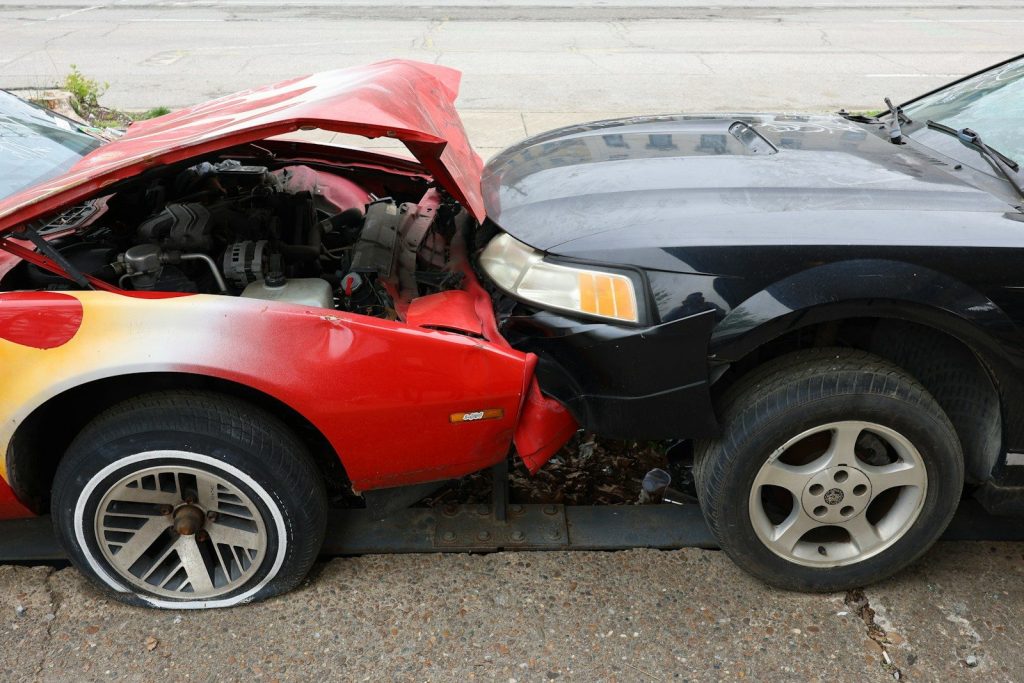
Most people who have never bought at a salvage auction do not think much about where the vehicles come from or how they got there. The path from a collision on a Tuesday morning to an auction listing the following week involves a specific sequence of steps, each with its own actors, incentives, and documentation. Understanding that sequence helps buyers interpret what they find in auction listings and anticipate what may or may not be disclosed.
After a collision, the vehicle owner typically contacts their insurance company to file a claim. An adjuster is assigned to evaluate the damage, either in person or through photographs submitted by the owner or a body shop. The adjuster compares estimated repair costs against the vehicle’s actual cash value to determine whether to authorize repairs or declare a total loss.
This evaluation happens under time pressure. Insurers have performance metrics tied to claim resolution speed, and adjusters carry caseloads that limit how much time they can spend on any individual vehicle. That pressure means that some damage goes undetected during the initial evaluation, and repair estimates may not capture the full scope of work required.
Bank-owned cars for sale that originated as insurance total losses went through this process before the bank became involved. In most cases, the insurer paid off the existing loan as part of the settlement, which means the bank received payment and the insurer took ownership of the vehicle.
The owner’s role in this stage is often underestimated as well. Some owners push for repairs even when insurers lean toward total loss designation, while others prefer a quick settlement and replacement vehicle. Those decisions can influence how aggressively repair estimates are prepared and whether supplemental inspections occur before the vehicle is written off.
Modern vehicles complicate the process further because repair estimates increasingly involve advanced driver-assistance systems, sensors, cameras, and calibration procedures. A relatively minor collision that damages bumpers or mirrors may require expensive electronic recalibration, dramatically increasing the repair estimate even when structural damage appears minor.
A total loss determination does not necessarily mean the vehicle is destroyed beyond repair. In many states, insurers declare a total loss when projected repair costs plus salvage value exceed a certain percentage of the vehicle’s market value.
That percentage threshold varies by state and by insurer policy. Some states use mandatory total-loss formulas set by law, while others allow insurers greater discretion. As vehicle repair costs rise, relatively newer vehicles are increasingly declared total losses after moderate accidents.
Labor rates also play a major role. A vehicle repairable in a low-cost rural market may become economically impractical in a high-cost urban region where labor rates at certified repair facilities are significantly higher.
This economic reality explains why many auction vehicles appear less damaged than buyers expect. The insurer’s decision is based on financial calculations rather than a statement that the vehicle is mechanically unrepairable.
Once an insurer takes ownership of a totaled vehicle, the primary goal is to liquidate it. Insurers are not in the business of storing vehicles or managing repairs. They want to recover part of the claims cost by selling the vehicle as quickly as possible.
Most insurers sell total-loss vehicles through established salvage auction relationships rather than individually. Auction companies pick up the vehicles, process the titles, list them in their systems, and conduct the sale, charging fees for those services.
The vehicle typically travels from the accident scene or repair shop to a tow yard, then to the auction storage facility. That journey may take days or weeks, during which the vehicle sits outdoors, potentially exposed to weather, and is not monitored for further deterioration.
Repo cars for sale follow a different path. A repossessed vehicle was taken from its owner by the lender, typically following missed payments, and sold through auction to recover the outstanding loan balance. Those vehicles have different documentation, different condition profiles, and different bidding dynamics than insurance total losses.
Transportation and storage conditions during this stage matter more than many buyers realize. A vehicle sitting outdoors for weeks with broken windows, damaged seals, or exposed wiring can deteriorate substantially after the original collision. Rainwater intrusion, battery discharge, mold growth, and corrosion sometimes occur after the accident rather than during the collision.
Auction companies function as intermediaries between institutional sellers and final buyers. Their role is operational rather than diagnostic. They organize inventory, manage title paperwork, coordinate transportation, photograph vehicles, and facilitate bidding.
Most auction operators process thousands of vehicles weekly. Because of that volume, condition reporting is standardized and relatively fast. The process is designed to generate enough information for bidding, not to provide a comprehensive mechanical inspection.
Some auctions offer enhanced condition reports or third-party inspections for additional fees. These services can include undercarriage photographs, engine compression testing, diagnostic scans, or detailed structural assessments. Serious buyers often use these supplemental services when considering higher-value vehicles.
Auction houses also segment their inventory by seller relationships. Insurance companies, banks, rental agencies, fleet operators, and government agencies may each have separate inventory streams with distinct condition patterns. Experienced buyers often specialize in certain seller categories because they understand the typical risks associated with those vehicles.
When a vehicle is declared a total loss, the insurer applies for a salvage title through the state motor vehicle authority. The process varies by state but generally involves submitting the existing clean title, the total loss declaration, and the insurer’s proof of ownership.
The salvage title is issued in the insurer’s name and travels with the vehicle to the auction. When the auction buyer wins the bid and pays, the title is transferred to them, still carrying the salvage designation.
Bank-repossessed vehicles follow a parallel title process. The lender, having taken possession of the vehicle through the repossession process, holds the title as lienholder and transfers it to the auction for sale. The buyer receives a title that reflects the repossession history.
Title branding rules differ significantly across states, creating additional complexity for buyers. Some states aggressively enforce permanent branding, while others allow rebuilt vehicles to return to cleaner title categories after inspection. Interstate buyers must understand their local registration requirements before bidding because a vehicle that is easily registerable in one state may face restrictions in another.
Delays in title processing can also affect auction timelines. Buyers occasionally purchase vehicles before physical titles are fully processed, especially after large-scale storm events or insurance backlogs. Understanding whether the title is immediately available or pending is important because it affects how quickly the vehicle can be transported, repaired, or registered.
By the time a vehicle reaches auction listing, several parties have evaluated and documented it: the insurer’s adjuster, the tow operator, the auction intake team, and sometimes a third-party inspection service. Each of those evaluations contributes to the listing information.
The auction intake process typically involves a standardized condition assessment that populates the damage category and severity fields in the listing. That assessment is conducted by auction staff rather than specialized mechanical inspectors, which means it captures obvious damage reliably but may miss subtle issues.
Photographs are often taken quickly under inconsistent lighting and weather conditions. Small dents, paint defects, frame distortion, or fluid leaks may not appear clearly in the images. Likewise, many listings do not include diagnostic scans or detailed mechanical evaluations unless specifically requested.
Buyers should also understand that auction descriptions prioritize legal disclosure rather than complete repair forecasting. The listing may identify obvious collision areas, but not every secondary consequence of the impact. Suspension geometry issues, sensor failures, hidden cooling system damage, or drivetrain stress may only become visible during teardown or road testing.
Once the vehicle sells, responsibility shifts entirely to the buyer. Most salvage auctions operate under strict “as-is” conditions with extremely limited post-sale recourse. The buyer arranges transportation, completes repairs, handles title transfers, and assumes all repair risk moving forward.
Professional rebuilders often transport purchased vehicles directly to specialized repair facilities, where teardown inspections are conducted immediately. That early inspection phase is critical because it identifies hidden damage before significant parts orders or labor investments are made.
Some vehicles are rebuilt for resale, while others are dismantled for parts. High-demand vehicles with expensive OEM parts frequently generate strong dismantling value even when structural damage makes rebuilding impractical. In fact, some auction buyers participate exclusively in parts dismantling rather than vehicle restoration.
Understanding this chain of custody and the limitations of each evaluation step is what allows experienced buyers to read auction listings critically, ask the right questions, and make informed decisions about where the listed condition information is likely to be complete and where it might be incomplete.
The most successful buyers understand that auction vehicles are not simply damaged cars. They are financial assets moving through a liquidation system designed for speed and cost recovery. Every participant in that system, insurers, lenders, tow operators, auction houses, and buyers, has different incentives that shape how information is collected and presented.
Recognizing those incentives helps buyers interpret listings more realistically. Instead of assuming the auction report represents a full mechanical diagnosis, experienced bidders treat it as one layer of information within a much larger investigative process.