There is an experience that most people have gone through but so few put a name to: how one particular piece of music can stop your brain’s thousand-meter sprint dead in its tracks, or how the sound of rain from afar somehow dissolves tension you didn’t even realize was stuck up there. These aren’t coincidences or poetic license — they are insights into an empirically validated connection between sound, attention and emotional wholeness.
The overlap of auditory neuroscience and mindfulness practice is a burgeoning field filled with researchers now discussing the intentional and non-judgmental act of listening in what they call mindful listening, which is the process of fully attending to sound. The evidence does also suggest it could be one of the more readily available and least utilized of tools for promoting emotional wellbeing.
Listening is not just about hearing — it is mindful listening. In hearing, your brain automatically processes sound whether you allow it to or not: It is passive. Mindful listening is, by contrast, intentional. And it means keeping your attention on sound, noticing the experience judgelessly without categorization and staying in the now through what you are hearing.
Psychologically, this distinction matters enormously. Jon Kabat-Zinn, one of the most respected researchers over this field defines mindfulness as “The awareness that arises from paying attention on purpose in the present moment and non judgmentally. That framework, when applied to sound, converts listening from a passive activity into a therapy.
Research in Frontiers in Psychology adds weight to this argument by identifying two fundamental and shared features of most definitions of mindfulness — attention and acceptance. The process of mindful listening simultaneously engages both: it hones a skill of focused attention, while requiring that the listener simply accept any sounds from their environment without judgement or analysis.
In order to recognize the reason mindful listening might influence your emotions, it is helpful to understand what sound does within the mind.
Sound avoids the mental obstacles that language and visual data have to go through. Because auditory input connects the auditory cortex directly to the amygdala —the emotional hub of our brains— sound is one of the most direct conduits into our emotional state (and responses). This is why some sounds incite fear, or grief, or calm—or joy—within milliseconds of us hearing them, before our conscious brain has even had a chance to chime in.
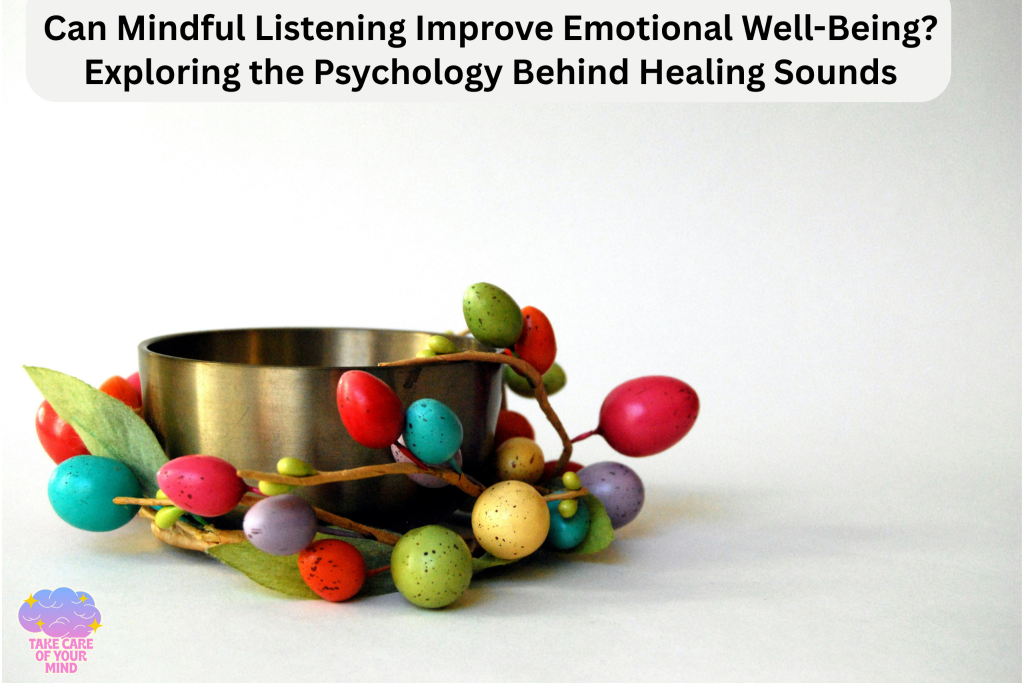
This pathway is used purposefully with mindful listening. When you train your mind to pay attention to sound — be it music, sounds from nature or therapeutic instruments like singing bowls — that person is offering their nervous system an object of focus and interrupting the disturbance loops of ruminating thought associated with anxiety and depression.
Accordingly, mindfulness-based music listening (MBML) has been demonstrated to improve attentional processing and conflict control processes effectively, especially for insomnia disorder (ISD) patients who tend to face difficulty regarding cognitive hyper-activation and emotional dysregulation.
Mindful listening is not just an internal, private thing. Empathic listening — listening with deep attention to the deepest truths of a relationship — reaches core psychological needs and interpersonal wellbeing, as documented in two recent studies published in peer-reviewed outlets.
The psychological impact of feeling truly listened to is profound. Research confirms that those whose loved ones practice good listening and connect with them following emotional conversations have less anxiety, greater clarity of self and a greater psychological safety. This quality of the listener communicates what is frequently not stated in the words: you matter and what you are going through is real.
As therapists, counselors or even friends wade into the murky waters of difficult conversations, this body of work offers a humbling verdict: your attention is in and of itself healing, no advice required.
One of the most fascinating trends in this area is a critical mass of research into healing sound instruments — especially Tibetan and crystal singing bowls, gongs, and bells. These instruments are now being analyzed at the clinical level, yet they are long used as meditation and ritual implements in ancient Buddhist,Tibetan cultures.
In a more recent systematic review in Healthcare (2025) of Tibetan singing bowl interventions, the authors reported decreasing anxiety and depressive symptoms with some preliminary evidence for a potential “regulatory” effect on autonomic nervous system activity and brainwave patterns.
The mechanisms being explored include:
These arguments are deserving of an answer (considered that researchers repeatedly advocate for additional intensive, decided reports to support these findings). The existing evidence is promising, though — and the accessibility and low-risk profile of sound-based practices merit serious consideration.
For readers curious about the therapeutic capabilities of certain healing instruments, opening follows resources like Healing Singing Bowls that provide a guidebook entryway to both sound healing history and practice— from instrument selection and use.
Perhaps the most fascinating part of mindful listening is its extremely low barrier for entry. There are no therapy appointments required, no prescriptions needed, and you do not have to buy expensive equipment. It requires attention — and the willingness to practice directing it.
Here are evidence-informed ways to incorporate mindful listening into daily life:
Sound meditation. Take out 10–20 minutes to passively listen to wellness sound — recording of a ringing bowl, nature soundscape or meditation music you selected for its soothing effect. The art is listening: for the rises and falls in tone, for timbre of sound and every silence between the notes. When your mind wanders— and it surely will —you observe, acknowledging the sound in your brain before gently turning back to it.
Body-aware listening. As you listen, bring awareness to how your body is reacting. Does your breathing slow? Does tension release in the shoulders or jaw? This physical presence enhances the practice and creates the mind-body awareness that leads to emotional regulation.
Empathic listening in conversation. For your next big interaction, prepare yourself with the intention to listen without needing to formulate a response; listen without passing judgment and refrain from rushing in like a superman in tights ready to solve the problem. See what changes — in another person, and your own presence.
Nature listening walks. Step outside without earbuds and simply listen. Birdsong, wind, the sound of footsteps on different surfaces — the natural soundscape offers a rich, ever-changing object of mindful attention with its own documented benefits for stress reduction and mood.
Research on mindful listening and sound therapy is strongest in mild-to-moderate stress, anxiety, and low mood. It also looked encouraging as an adjunct in settings from palliative care, chronic pain control to even insomnia support.
A caveat that warrants mentioning is that mindful listening and sound healing should be considered complementary therapy, not replacement clinical therapy. If you are suffering extreme depression, anxiety, trauma or other mental illness then talk to a qualified psychologist. They perform best when they are integrated within a larger, supportive wellness ecosystem rather than stand alone tools.
If you are interested in tools for sound therapy and how to use them regularly as part of your health regimen check out Healing Singing Bowls which includes a description of all the different types of instruments employed by sound healing practitioners, providing guidance to beginners.
A single, quiet insight – that attention is not passive — unifies all of these findings:
A. Empathic listening
B. Singing bowl studies
C. Mindfulness neuroscience
What we focus on injects physiology. We are wired by it, our brain states are determined by it and, in no small way at least, what emotional experience we occupy is dictated by it.
Essentially, mindful listening is a way of getting that attention back. In an era designed to scatter attention, the intentional choice to devote our full attention — to sound, to a fellow human or perhaps most importantly to the stillness behind all noise — could be one of the most authentically revolutionary acts we perform for (and on behalf of) our brains.
They have always been there as sounds. If we listen hard enough, this is where it starts to make some sort of sense: We are only just beginning to understand.
If you are currently struggling with your mental health, please reach out to a qualified mental health professional. In a crisis, contact the 988 Suicide & Crisis Lifeline by calling or texting 988.
References & Further Reading: