Yoga and discipline are not two separate ideas. They are deeply connected. When you commit to a daily yoga practice, you train far more than your body. You build the mental architecture for focus, resilience, and lasting consistency in every area of life.
Most people begin yoga for physical reasons. They want flexibility, strength, or stress relief. However, over time, something deeper happens. The mat becomes a laboratory for self-discipline. Every session teaches you to show up, push through resistance, and stay present. Therefore, the benefits extend well beyond the body.
At its core, yoga is a practice of self-mastery. Ancient yogis did not use yoga simply for fitness. They used it to master the mind and overcome inner obstacles. The Sanskrit concept of tapas, one of the Niyamas in classical yoga philosophy, translates directly to discipline or fiery effort. It means doing the work even when motivation fades.
This is the foundation of yoga and discipline working together. Motivation is temporary. Discipline is a skill. When you roll out the mat on a cold morning, tired after a long day, and practice anyway, you strengthen the muscle of willpower.
Scientists confirm this connection. Research from psychologist Kelly McGonigal shows that regular yoga practice makes the willpower systems of the brain larger, better connected, and more efficient. As a result, practitioners find it easier to make calm, calculated decisions in all areas of life.
The mental benefits of consistent yoga are backed by strong science. Studies show that yoga reduces cortisol, the primary stress hormone, and activates the parasympathetic nervous system. This shift from stress response to calm awareness is not accidental.
It is a skill you train repeatedly on the mat. Furthermore, research shows that regular yoga increases gray matter in the brain, particularly in areas responsible for emotional processing and stress regulation.
Holding a challenging pose for 30 seconds trains more than muscle. It trains your ability to sit with discomfort without reacting. Senior Iyengar teacher Patricia Walden describes this as building the “muscle of self-discipline.”
Each time you override the inner voice saying “I can’t” or “I’m too tired,” you charge your willpower reserve. In contrast, skipping practice reinforces avoidance patterns that weaken mental resilience over time.
Additionally, yoga balances key neurotransmitters including GABA, serotonin, and dopamine. These chemicals directly influence mood, focus, and cognitive performance. A study published in JAMA Psychiatry found that regular yoga significantly reduced symptoms of depression.
Therefore, building a yoga habit is also building emotional intelligence and mental stability.
Consistency is the bridge between intention and transformation. A single yoga session feels good. However, a daily yoga practice rewires your nervous system, reshapes your habits, and rebuilds your relationship with effort. Even 10 minutes each day creates a powerful anchor of discipline in your routine.
The ripple effect is real. When you step onto the mat consistently, your mood improves, your body grows stronger, and your focus sharpens. These qualities then overflow into your work, your relationships, and your goals.
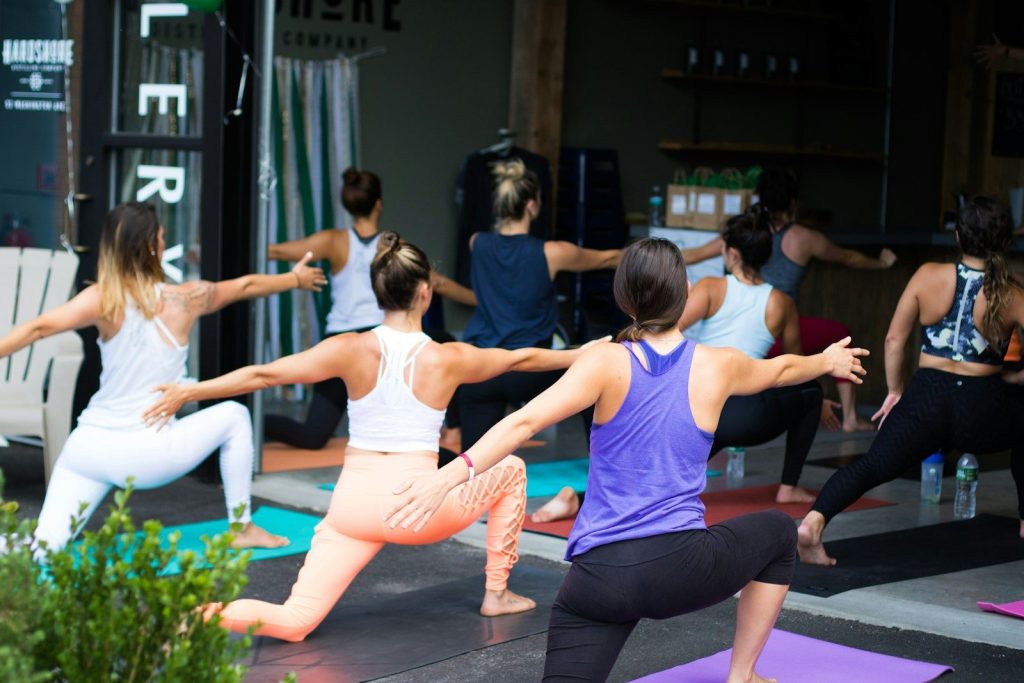
For example, the patience you build holding Warrior II translates into patience during a difficult work deadline. The breath control you practice in pranayama helps you stay composed during stressful conversations.
Furthermore, consistency builds self-trust. Every time you honor the commitment to practice, you send a signal to yourself: “I do what I say I will do.” Over time, this internal integrity becomes one of the most powerful forces in your life.
Classical yoga gives us a clear framework for cultivating discipline through the Niyamas, the personal observances from Patanjali’s Yoga Sutras. These five principles directly support a disciplined life.
The structure of your practice matters as much as the content. A discipline-focused yoga routine does not need to be long. However, it must be intentional and regular. Here is how to build one that sticks:
The real test of yoga and discipline is not what happens on the mat. It is what happens after you leave it. Practitioners consistently report that a regular yoga habit improves their productivity, emotional regulation, and ability to follow through on goals.
The reason is neurological. Yoga trains the prefrontal cortex, the part of the brain responsible for planning, decision-making, and impulse control. As this region grows stronger through practice, your capacity for self-regulation improves across the board.
Therefore, the focus you build in a flow sequence sharpens your focus at work. The patience you cultivate in Yin yoga deepens your patience in relationships.
Additionally, yoga teaches you to respond rather than react. In a stressful pose, you learn to breathe through discomfort instead of giving up. This same response pattern then activates automatically during life’s pressures.
As a result, disciplined yogis often become disciplined thinkers, better leaders, and more consistent performers in every domain they pursue.
Mental resilience is not built in a single session. It accumulates over months and years of steady practice. The yogic path is not about perfection. It is about return. Every time you fall off your routine and come back to the mat, you practice one of the most important forms of discipline: starting again without judgment.
Science supports this long-term view. Research published in peer-reviewed journals confirms that higher involvement in yoga practice correlates with increased psychological well-being, stronger sense of coherence, and lower psychological distress.
Moreover, the more deeply you engage with yoga as a philosophy and not just a physical exercise, the more profound the mental health benefits become.
Ultimately, yoga and discipline are a lifelong practice. The mat is your training ground. The poses are your teachers. And consistency, showing up day after day with honesty and effort, is the greatest discipline yoga has to offer.